More than 1.5 billion women and girls worldwide live in areas where climate hazards intersect with economic insecurity and gender inequality, as a new UN Women assessment exposes shortcomings in governments’ efforts to protect them from the effects of climate change.
The agency says although 73 per cent of countries acknowledge the specific climate risks facing women and girls in their national climate plans, only slightly more than one in three address those risks comprehensively.
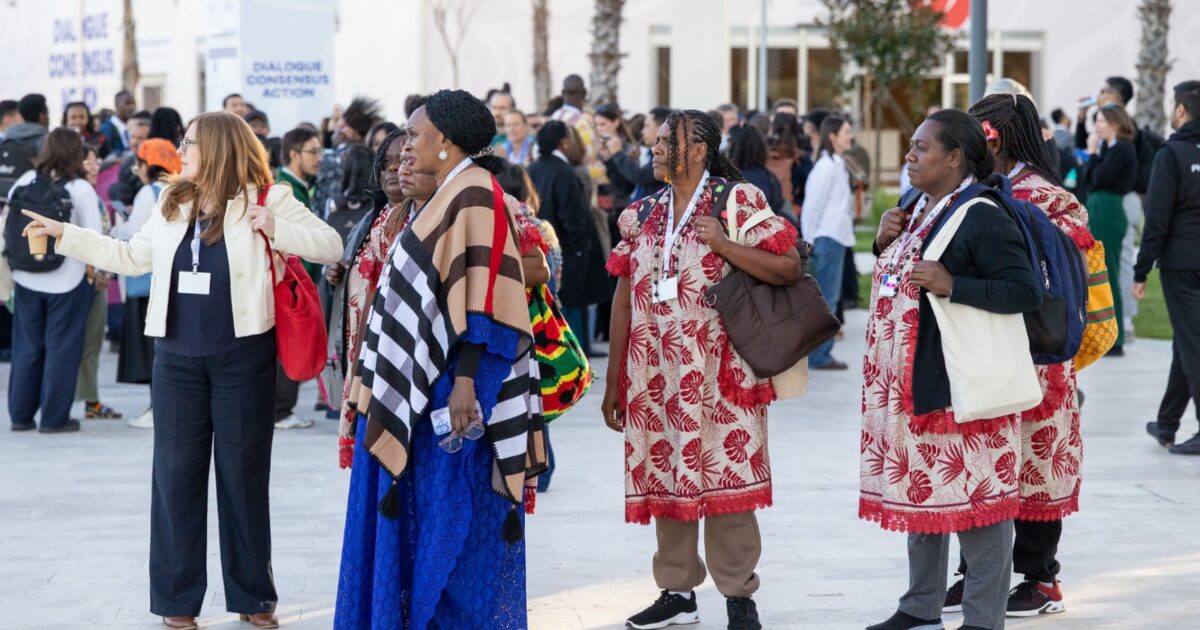
The findings, contained in a new fact sheet titled Gender Equality in the Age of Climate Crisis, were released on November 10 as world leaders and climate negotiators gather in Antalya, Türkiye, for the 31st United Nations Climate Change Conference (COP31).
The assessment highlights how rising temperatures, prolonged droughts and other climate-related pressures are worsening existing inequalities, particularly for women and girls whose livelihoods and access to economic opportunities are already constrained.
Under a worst-case scenario, climate change could push up to 141 million additional women and girls into extreme poverty by 2050.
The economic consequences are also unequal. Data from 24 countries show that a one-degree Celsius increase in average temperatures is associated with women losing 34 per cent more of their total income than men.
UN Women links the disparity partly to women’s more limited opportunities to move into non-farm employment or migrate when agricultural production and livelihoods are affected.
The threat extends beyond income and livelihoods to personal safety. Data covering 14 countries show that prolonged extreme drought is associated with a 21 per cent increase in the odds of sexual violence against adolescent girls and young women.
The findings highlight the wider social consequences of climate-related resource shortages and the vulnerability of women and girls when communities face prolonged environmental and economic stress.
Climate commitments fall short of women’s needs
Beyond documenting the impacts, UN Women is calling on governments to move from recognising gender inequalities in climate policy to addressing them through concrete measures, adequate financing and greater participation of women in decision-making.
In its COP31 briefing, Promoting Gender Equality and Women’s Livelihoods, Rights and Resilience at UNFCCC COP31, the agency outlines 15 recommendations for governments and parties to the UN Framework Convention on Climate Change.
A central demand is increased gender-responsive climate finance to ensure that women and marginalised groups have fair access to resources, opportunities and the benefits of climate action.
The briefing points to the New Collective Quantified Goal on climate finance, which calls for climate financing to benefit women and girls while identifying them among vulnerable groups.
It also stresses the importance of women’s participation and leadership in mobilising and allocating the US$300 billion pledged for climate action by 2035.
UN Women further calls for the capitalisation and operationalisation of the Loss and Damage Fund, with funding distributed equitably to women and their organisations.
The agency argues that climate-change-related economic losses are not limited to damaged infrastructure and reduced agricultural production. They also include non-economic losses that disproportionately affect women and girls.
Women must have a voice in climate decisions
The agency is also urging governments to ensure that women, girls and other marginalised groups have full, equal and meaningful participation in decisions on climate change and environmental degradation.
It says communities most affected by climate change, including women’s organisations, must be adequately represented in climate decision-making processes.
The briefing also calls for stronger protection for women environmental human rights defenders, whose work in protecting communities and the environment can expose them to threats.
On the transition to low-carbon, climate-resilient economies, UN Women says governments must ensure women benefit from new opportunities while protecting their labour rights.
It warns that transitions that ignore existing structural inequalities risk deepening injustice rather than addressing it.
The agency is therefore calling for gender-responsive governance, meaningful participation and public, grant-based financing under the Just Transition Mechanism.
Another concern is the unequal burden of unpaid care and domestic work.
UN Women wants governments to recognise women’s paid work and the unpaid care, domestic, and community responsibilities women and girls carry when developing and implementing their Nationally Determined Contributions (NDCs) and National Adaptation Plans (NAPs).
The agency also calls for investment in gender-disaggregated climate data, including information broken down by sex, age and disability, to support evidence-based climate policies.
Belém Gender Action Plan needs funding
A key part of UN Women’s recommendations is fully implementing and financing the Belém Gender Action Plan, adopted under the UNFCCC framework at COP30.
The agency describes the plan as a framework for advancing gender equality in climate action, including stronger attention to climate and health, protection for women environmental defenders, and stronger care systems.
However, it warns that political commitments alone will not produce meaningful change without predictable, adequate and accessible financial resources.
It says funding the plan is essential to ensuring that gender equality becomes central to climate mitigation, adaptation and responses to loss and damage, rather than remaining an additional consideration in climate negotiations.
UN Women Executive Director Sima Bahous said women already contribute to climate solutions in communities, laboratories, parliaments, and on the front lines of the climate crisis.
“Across the world, women are already leading the fight for a better future – in their communities, in laboratories, in parliaments and on the front lines of the climate crisis. We must give women and girls equal rights, resources and the power to lead, and they will help drive the change our world so urgently needs,” she said.
As negotiations continue at COP31, the agency’s message is that climate action cannot be considered inclusive while the people facing disproportionate risks remain inadequately represented in decisions and lack equitable access to the resources needed to respond.
For UN Women, addressing the gender dimensions of climate change is not separate from the broader climate agenda. It is central to building a just and lasting response to the crisis.
DISCLAIMER: The Views, Comments, Opinions, Contributions and Statements made by Readers and Contributors on this platform do not necessarily represent the views or policy of Multimedia Group Limited.
DISCLAIMER: The Views, Comments, Opinions, Contributions and Statements made by Readers and Contributors on this platform do not necessarily represent the views or policy of Multimedia Group Limited.
Source link