
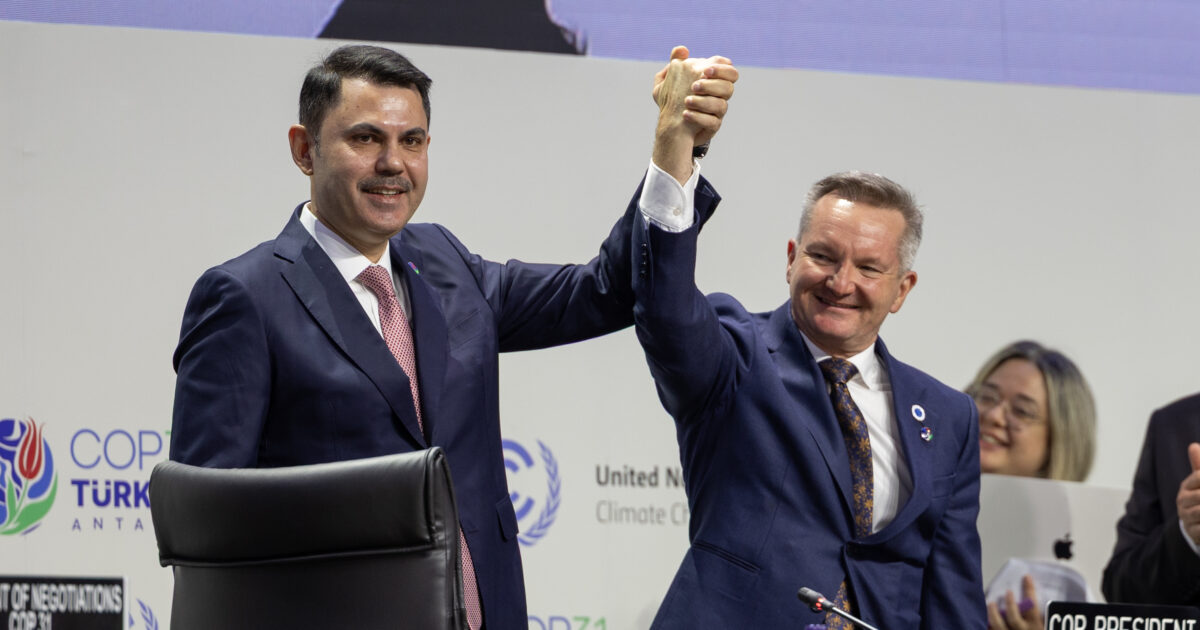
COP31 President Murat Kurum, Türkiye, and COP31 President of Negotiations Chris Bowen, Australia (Photo: © UN Climate Change – Kiara Worth)
A new climate agreement has been put forward at COP31 in Antalya, Turkey, after negotiations ran into Sunday morning, with the Australian and Turkish presidencies expressing confidence that the proposed package could secure the support of nearly 200 countries.
The proposed deal seeks to address some of the most contentious issues at the climate summit, including the future of fossil fuels and financial support for developing countries struggling to adapt to the impacts of climate change.
COP31 President Murat Kurum announced the new text during a late-night plenary session, saying the presidencies believed they had found common ground among the negotiating parties.
“We believe that we have put forward a text which all the parties can agree upon,” he told delegates.
He said negotiators would reconvene later on Sunday morning to begin the process of approving the agreement.
The announcement followed days of difficult negotiations that continued beyond the official Friday deadline, through Saturday and into the early hours of Sunday.
The latest draft is said to have revised an earlier proposal that attracted criticism from campaigners and some countries for failing to demonstrate sufficient ambition, particularly because it made no reference to ending the use of fossil fuels.
Fossil fuels remain one of the most divisive issues in international climate negotiations, with countries holding different positions depending on their economic interests and dependence on oil, gas and coal.
Kurum said the latest proposal had addressed concerns surrounding fossil fuels, as well as demands for greater financial assistance to help developing countries prepare for and respond to climate change.
The agreement emerged from intensive consultations involving Australia, which is leading the negotiations, Turkey, the host country, and delegations representing nearly 200 nations.
The challenge for the two presidencies has been to reach a compromise between countries facing the harshest consequences of global warming and those whose economies depend heavily on producing or consuming fossil fuels.
Under the proposed arrangements, delegations were given until 0300 GMT to raise objections, with a further session scheduled for 0600 GMT to begin the approval process.
However, whether the package would secure the necessary consensus remained dependent on the response of the negotiating parties.
The negotiations have taken place against growing concern about the pace of global warming and the ability of countries to meet the temperature goals agreed under the Paris Agreement.
COP31 is the first UN climate summit since the UN’s environmental body confirmed that global temperatures were on course to exceed the 1.5°C threshold that countries committed to pursuing efforts to limit global warming to in the Paris Agreement more than a decade ago.
Crossing that threshold would increase the risks and severity of climate impacts, including extreme weather events, placing additional pressure on communities, economies and countries with limited resources to respond.
For developing countries, particularly those already experiencing climate-related losses and damage, the outcome of the negotiations could have significant implications for access to climate finance and support for adaptation.
The proposed package therefore faces a critical test of whether countries can agree on a common path forward despite their differences over fossil fuels, climate finance and the responsibilities of nations in addressing the climate crisis.
DISCLAIMER: The Views, Comments, Opinions, Contributions and Statements made by Readers and Contributors on this platform do not necessarily represent the views or policy of Multimedia Group Limited.
DISCLAIMER: The Views, Comments, Opinions, Contributions and Statements made by Readers and Contributors on this platform do not necessarily represent the views or policy of Multimedia Group Limited.
Source link