
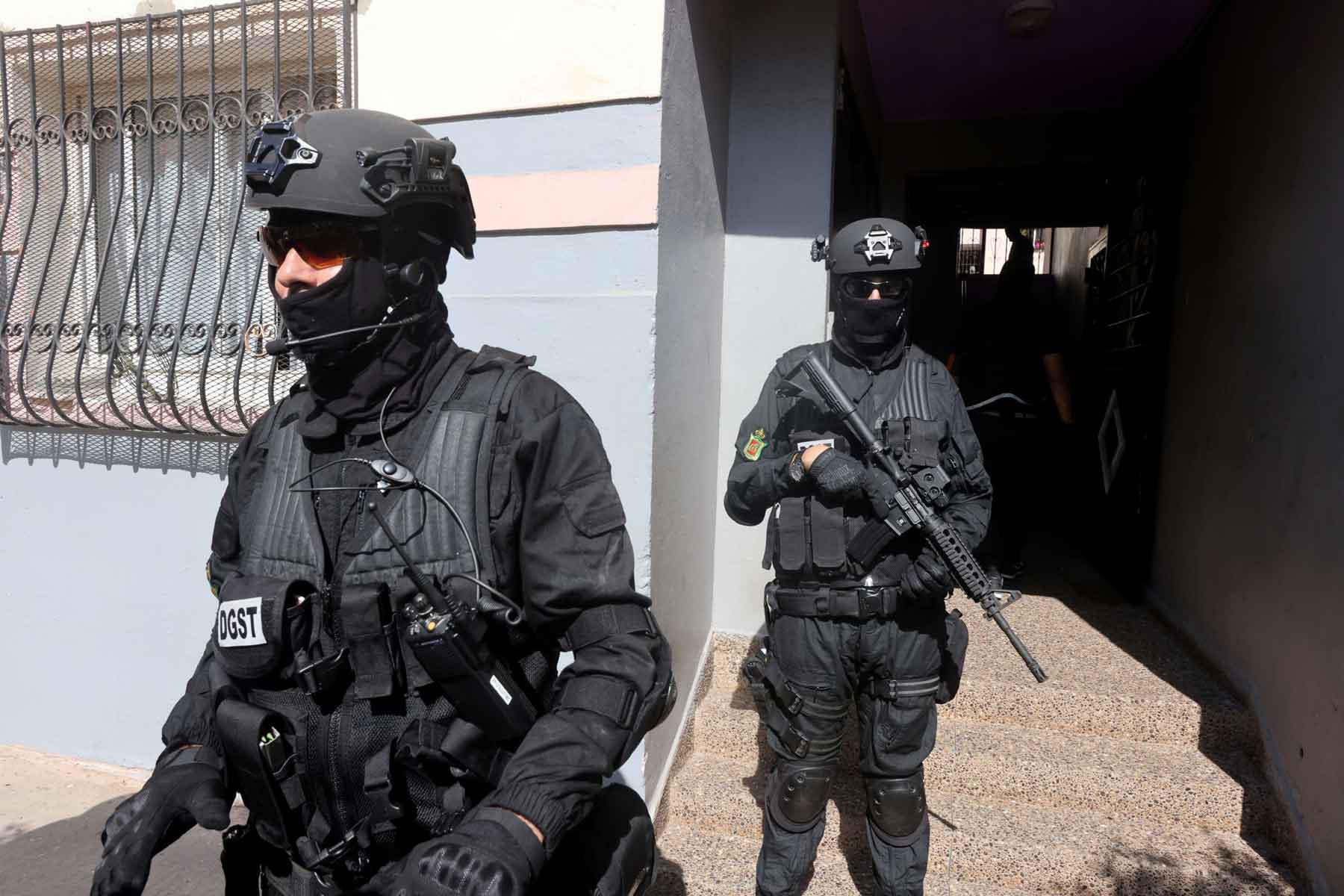
Two major cases uncovered by the U.S. justice system have revealed the growing scale of transnational criminal networks linking the Middle East, Africa, Europe and Latin America, with Moroccan security services playing a central role in global efforts to combat terrorism and organised crime.
The cases, announced by the U.S. Attorney’s Office for the Eastern District of Virginia, highlight the convergence of drug trafficking, illegal arms trade and terrorist activity.
In one case, Lebanese-Syrian national Antoine Kassis was convicted of narco-terrorism conspiracy after orchestrating a network involving cocaine trafficking, money laundering and the supply of weapons to Colombia’s National Liberation Army (ELN).
In another, Bulgarian arms trafficker Peter Dimitrov Mirchev and his accomplices are facing prosecution for attempting to supply a sophisticated military arsenal to the Mexican cartel CJNG, which has been classified as a terrorist organization.
Morocco featured prominently in both operations, emerging as a critical link in the international security framework.
Authorities from the General Directorate of National Security and the General Directorate for Territorial Surveillance played direct roles in the arrest and extradition of key suspects.
In the Mirchev case, Kenyan suspect Elisha Odhiambo Asumo was arrested in Casablanca before being extradited to the United States. Moroccan services were also cited among partners that provided “significant assistance” in the Kassis investigation.
The developments underscore Morocco’s expanding role as a hub for intelligence and security cooperation, particularly in cases involving terrorism and cross-border criminal networks.
The operations involved an extensive coalition of global agencies, including the U.S. Drug Enforcement Administration’s Special Operations Division, U.S. judicial authorities, African partners such as Ghana and Kenya, European counterparts in Spain, and Moroccan services.
Morocco’s role stood out for its ability to combine operational action, including arrests, with strategic intelligence support, at a time when criminal networks increasingly exploit jurisdictional gaps.
The cases also point to a broader shift in global crime trends, with growing links between organised crime groups and terrorist organisations.
Investigations into the Kassis network revealed connections spanning the Syrian regime, Latin American cartels and groups such as the ELN, as well as entities linked to Hamas.
Meanwhile, the Mirchev case exposed attempts by cartels like CJNG to acquire advanced military capabilities, including surface-to-air missiles, drones and heavy weapons.
These developments highlight the urgency for stronger international security collaboration, especially with partners that possess advanced intelligence capabilities.
Beyond the courtroom, the cases signal a wider strategic reality: the fight against organised crime and terrorism now depends on tightly coordinated global networks. Within this system, Moroccan security services are emerging as discreet but decisive actors, operating across continents to help dismantle complex transnational threats.
DISCLAIMER: The Views, Comments, Opinions, Contributions and Statements made by Readers and Contributors on this platform do not necessarily represent the views or policy of Multimedia Group Limited.
DISCLAIMER: The Views, Comments, Opinions, Contributions and Statements made by Readers and Contributors on this platform do not necessarily represent the views or policy of Multimedia Group Limited.
Source link