
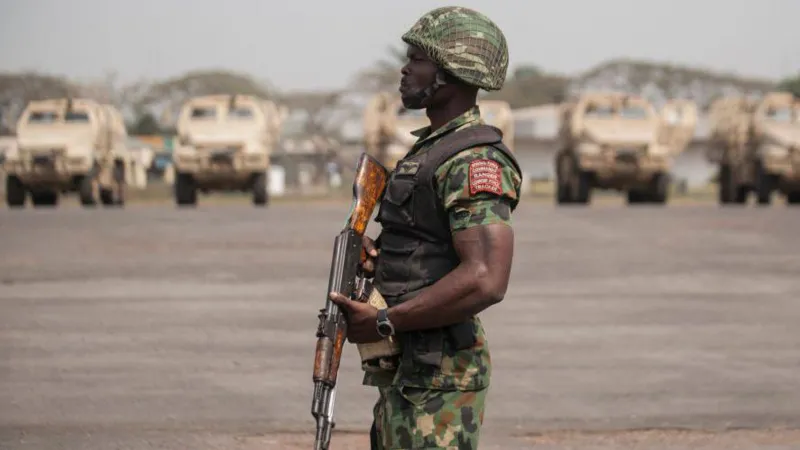
The United States government has significantly intensified its security posture in West Africa, issuing a sweeping set of directives that signal a deepening crisis in regional stability. While strategic partnerships continue to expand, a series of urgent administrative actions on Wednesday revealed a stark divergence between high-level defence cooperation and the deteriorating safety of the civilian landscape.
The U.S. State Department issued a stark update to its travel advice on Wednesday, April 8, 2026, urging American citizens to “reconsider travel to the country, citing risks such as ‘terrorism, civil unrest [and] kidnapping.’” While the federation remains at a general “Level 3” status, the advisory designates specific regions as “Level 4,” the most severe classification. “The security situation in these states is unstable and uncertain,” the advisory said, adding: “Do not travel to these areas for any reason.”
Expanding Danger Zones Across the Federation
Washington has placed nearly two-thirds of Nigeria’s states under the highest risk category. New additions include Plateau, Jigawa, Kwara, Niger, and Taraba. These regions join states such as Borno and Yobe, which have long been affected by an Islamist insurgency. The advisory warns that “attacks could occur with little or no warning in public spaces including markets, hotels, places of worship, schools and transport hubs.” Officials also noted that “kidnappings for ransom occur frequently,” specifically highlighting that “dual U.S.-Nigerian nationals and Americans” are often targeted because they are “perceived to be wealthy.”
Embassy Personnel Drawdown in Abuja
In a move that underscores the gravity of the threat, Washington authorised the departure of “non-emergency” staff and their families from the U.S. embassy in Abuja. This specific action, following what the State Department calls a “deteriorating security situation” across the country, serves as a practical application of the heightened travel risks. The embassy has yet to say when the affected staff will be departing. This decision “underscores the gap between strategic military cooperation and the reality of daily insecurity faced by civilians in many parts of the country.”
Strategic Partnership Versus Domestic Volatility
Nigeria maintains a “long-standing partnership with the US on matters of intelligence, security and counter-terrorism.” According to the U.S. State Department, Washington has been working with Abuja on “counter‑terrorism, maritime security, intelligence sharing and military training.” Recent cooperation has included “surveillance and reconnaissance support, and the use of US‑supplied aircraft and helicopters by Nigerian forces against Islamist insurgents and armed groups.” Despite this expanding partnership, a “fresh surge in deadly attacks” continues to plague the nation.
Complex Threats and Regional Violence
The security landscape is increasingly complicated by “growing cooperation between extremist groups and local criminal gangs.” In the northeast, the “Boko Haram group and its offshoot, Islamic State West Africa Province, continue to mount attacks on civilians, military convoys and aid workers, particularly in Borno.” Meanwhile, in Plateau and Benue, “weeks of violence blamed on a mix of armed banditry, communal clashes and reprisal attacks have left dozens of people dead,” including a late March assault in Plateau that claimed over 28 lives. The advisory follows heightened tensions after these specific communal clashes and reports of “Fulani terrorist” attacks on villages during the Easter period.
Regional Contagion: Escalation in São Tomé and Príncipe
The regional security shift extends beyond the mainland. The State Department concurrently raised its travel advisory for São Tomé and Príncipe to “Level 3: Reconsider Travel.” Situated in the Gulf of Guinea off the western coast of Gabon, this central African island nation faces growing instability as it enters a “politically active year.” Officials warn that the “security environment could worsen with little notice” due to an upcoming cycle of “political party conventions in early April, a presidential election scheduled for July 19, and legislative elections at the end of September.” These events are expected to trigger unrest that could “disrupt transportation” and “complicate departure options for American travellers.”
Limited Emergency Support and Health Risks
A critical factor in both advisories is the “limited capacity to provide emergency services to American citizens.” In São Tomé and Príncipe, medical facilities are “extremely limited, with no adequate trauma or ambulance services.” Similarly, in Nigeria, health care services are “inconsistent” and “commonly used medications may be unavailable.” Consequently, the U.S. government now requires special permission for its employees to travel to São Tomé and Príncipe due to these “safety concerns.”
Economic Consequences and Diplomatic Friction
The travel warnings come as Nigeria seeks foreign investment and economic recovery. There are “fears that travel warnings could affect diaspora travel, international conferences and development activity.” Businesses have previously warned that these high-risk classifications “risk reinforcing perceptions of Nigeria as unsafe, even in areas without active conflict.” In the past, officials have argued that such advisories “fail to reflect security improvements in some regions and risk unfairly tarnishing the country’s image.” Some local analysts have characterised the move as part of a “hostile disposition” from Washington, amid unconfirmed reports regarding U.S. military base interests in the region.
Actionable Guidance for Travellers
For both nations, the Department of State recommends that travellers “carefully assess risks before travelling” and take heightened precautions. This includes “monitoring local news, avoiding demonstrations, and keeping travel documents accessible.” Washington strongly encourages citizens to enrol in the Smart Traveller Enrollment Program (STEP) to receive real-time security updates and “facilitate contact with U.S. officials during emergencies.”
Perspectives from the Ground
The impact remains nuanced for foreign workers. One U.S. citizen working for a U.S. oil firm in Lagos stated that most Americans he knows believe they are “largely shielded from the safety risks in other states.” However, he noted that expatriates remain concerned about “how US-based companies in Nigeria will respond.” As violence spreads beyond traditional flashpoints, some Nigerians say the U.S. warning “highlights the urgency of restoring security and rebuilding confidence—both at home and abroad.”
Fundamentally, the friction between regional pursuit of economic stability and Washington’s duty to protect its personnel remains a delicate diplomatic tightrope. While security partnerships provide regional militaries with advanced tools, the persistent volatility on the ground suggests that hardware alone cannot bridge the gap between high-level strategy and the safety of the average citizen.
DISCLAIMER: The Views, Comments, Opinions, Contributions and Statements made by Readers and Contributors on this platform do not necessarily represent the views or policy of Multimedia Group Limited.
DISCLAIMER: The Views, Comments, Opinions, Contributions and Statements made by Readers and Contributors on this platform do not necessarily represent the views or policy of Multimedia Group Limited.