
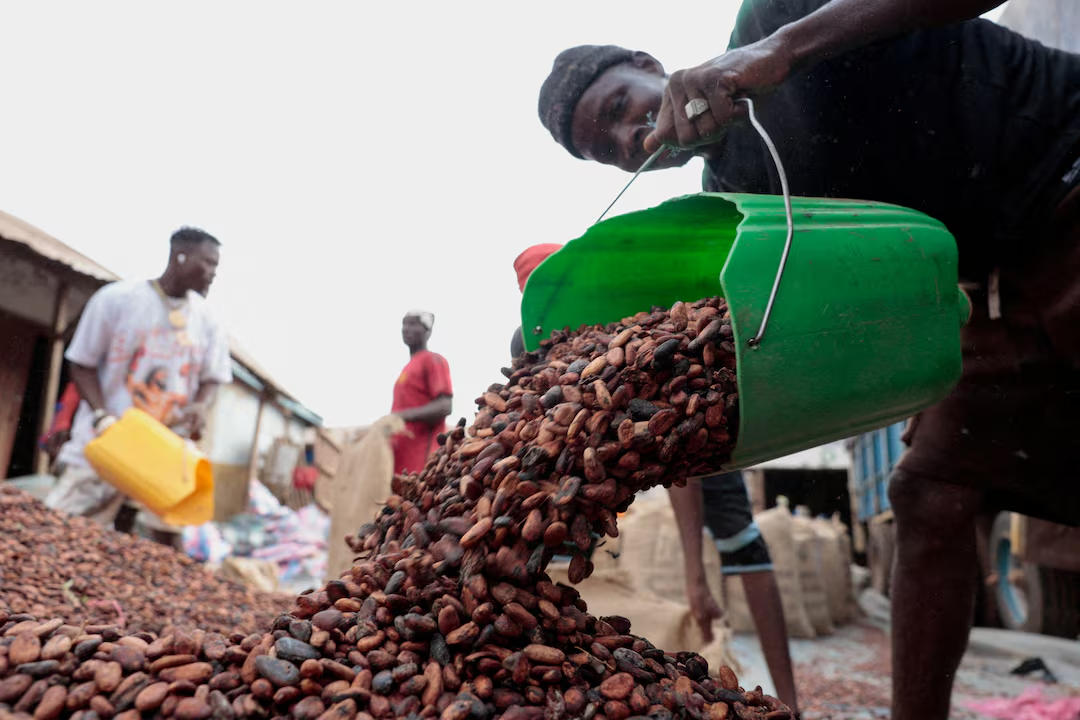
Ivory Coast has sold about 1 million metric tons of cocoa in export contracts for the 2026-27 main crop, but has started to slow sales due to concerns about the impact of a looming El Niño weather pattern on output, four sources told Reuters.
The Abidjan-based Coffee and Cocoa Council (CCC) has also raised its premium on further sales from zero to at least £100 ($135) per ton above the futures price, according to two industry sources and two CCC sources.
The moves by the world’s biggest cocoa producer point to firming demand for the chocolate ingredient and an expected tighter market when the new season begins on September 1.
“We have already sold between 950,000 and 1 million tons for next season, but we preferred to slow down and be cautious. We are selling less and less,” one of the CCC sources said.
Two Europe-based sources – a senior cocoa trading executive at a global agri-commodities firm and the head of a small- to medium-sized trader – said CCC forward sales were rumoured at 1.1-1.2 million tons and confirmed the higher premium.
“The market is allowing them to be a bit more aggressive. They don’t need to lower the (premium) to get contracts in the book,” said the head of the small-to medium-sized trader.
EL NINO THREATENS OUTPUT
The El Niño weather pattern could bring drought to cocoa producers, including the Ivory Coast, Ghana, Cameroon, and Nigeria, disrupting output.
“In truth, we are observing a certain fragility in the development of the mid-crop and therefore in the next main crop. It was very hot between January and May, and the rains of the past few weeks cannot make up for everything,” one of the CCC sources said.
“If El Niño intervenes as predicted in June and July, it will be difficult.”
Exporters interviewed by Reuters were split on whether the CCC’s decision to slow sales is justified. Four said El Niño would have no impact on production, while two backed the CCC’s caution.
Most exporters said the biggest risk next year is poor plantation maintenance and the need for fertilisers, as many Ivorian farms are ageing and affected by disease.
“I don’t see El Niño as a threat to production. The real concern is the lack of fertilisers and treatments. It’s a shame the CCC is refusing to sell when there’s good demand,” said the head of an Abidjan-based export company.
Fertiliser prices have surged after the war in Iran disrupted flows through the Strait of Hormuz, a shipping route through which Iran handles about a third of global fertiliser trade.
DISCLAIMER: The Views, Comments, Opinions, Contributions and Statements made by Readers and Contributors on this platform do not necessarily represent the views or policy of Multimedia Group Limited.
DISCLAIMER: The Views, Comments, Opinions, Contributions and Statements made by Readers and Contributors on this platform do not necessarily represent the views or policy of Multimedia Group Limited.
Source link