
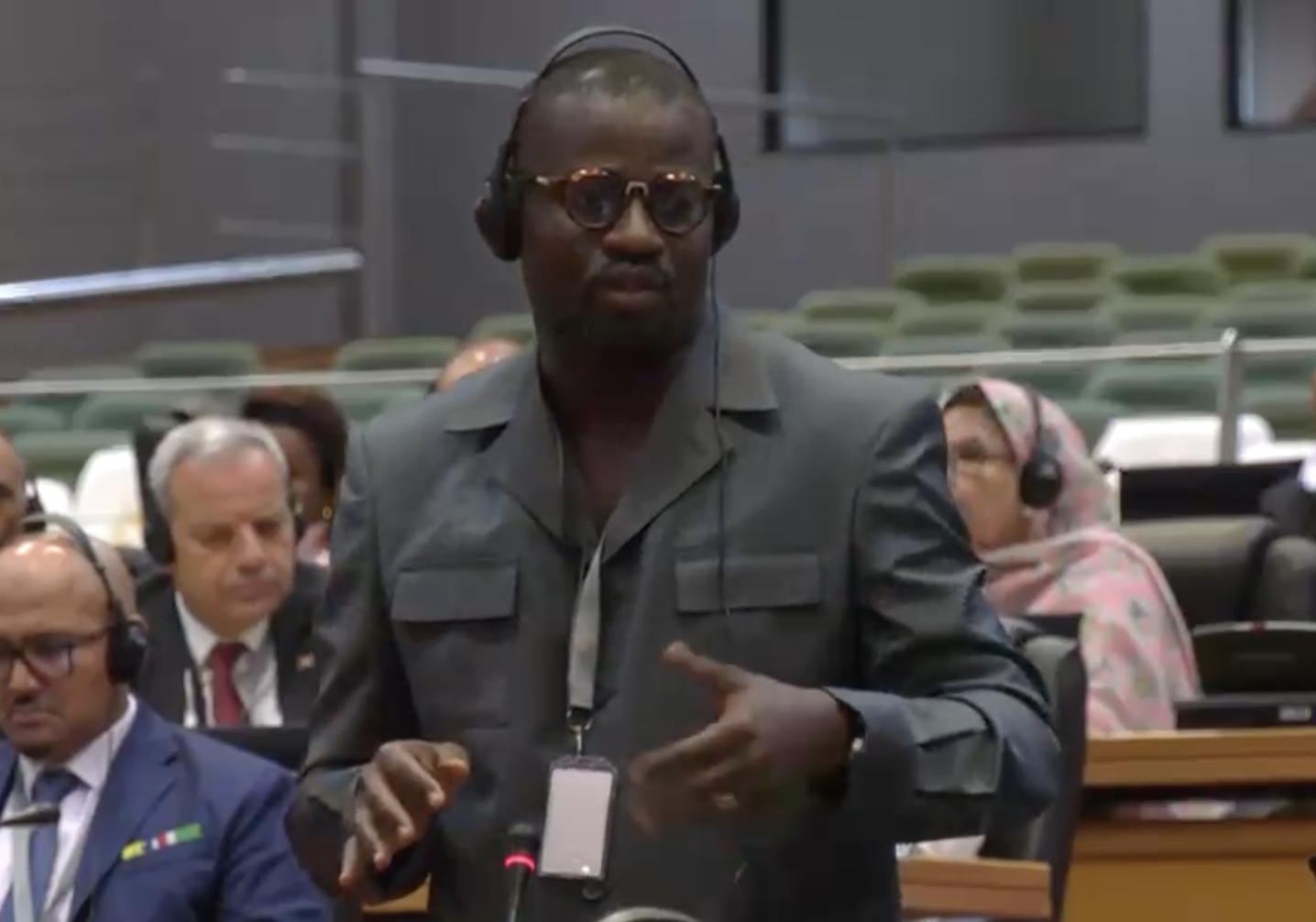
The Chairman of the Pan-African Parliament’s Committee on Health, Labour and Social Affairs, Frank Annoh-Dompreh, is leading efforts to develop what could become Africa’s first harmonised legal framework on cancer prevention, treatment, financing and research across all 55 African Union member states.
Addressing members of the Pan-African Parliament during the Committee’s statutory sitting, the Minority Chief Whip said the initiative marks the beginning of a continental legislative process that will culminate in the adoption of the Africans Beating Cancer (ABC) Model Law.
According to him, “we are simply preparing to pass a model law on cancer,” explaining that the framework would allow individual African countries to domesticate the legislation and strengthen their national cancer control programmes.
The initiative comes just months after Annoh-Dompreh assumed office as Chairman of the Committee, where he pledged to champion model laws to address major public health challenges, including cancer, malaria, mental health and the integration of traditional medicine into mainstream healthcare.
A presentation before the Committee highlighted the scale of Africa’s growing cancer burden. It estimated that the continent records about 1.2 million new cancer cases each year, with that figure projected to rise to 2.1 million annually by 2040 if urgent action is not taken.
Cancer-related deaths are also expected to increase to 1.4 million a year by 2040. The Committee was told that nearly half of African countries still do not have radiotherapy facilities, leaving millions without access to life-saving treatment.
The presentation argued that Africa’s greatest challenge is not the absence of medical knowledge or treatment options but the lack of enforceable legal frameworks that guarantee access to prevention, diagnosis and care.
It noted that vaccines, screening technologies and effective treatments already exist, yet many patients continue to die because comprehensive national cancer laws are absent.
The burden is particularly severe for cervical cancer, which claims nearly 75,000 African women every year despite being largely preventable through vaccination and early screening.
Childhood blood cancers were also highlighted, with survival rates reaching about 90% in wealthy countries, while up to seven out of every 10 affected African children die because of limited access to treatment.
The proposed ABC Model Law seeks to reverse those trends by strengthening prevention, expanding early detection and improving access to treatment across the continent.
Beyond its health impact, the framework is expected to deliver significant economic benefits. Estimates presented to the Committee suggest effective implementation could save more than 60,000 lives annually, expand Africa-led clinical trials and reduce the need for patients to travel abroad for specialised treatment.
Early-adopting countries are also projected to realise economic gains equivalent to between 1.5% and 3% of Gross Domestic Product over a decade.
The Committee was informed that the draft legislation, developed under the Africans Beating Cancer Model Law initiative by Partners for Patients NGO in collaboration with the Pan-African Parliament’s Permanent Health Committee, will now move through parliamentary debate before being presented to national legislatures for domestication.
It covers cancer prevention, screening, treatment, palliative care, financing, research, access to medicines, clinical trials and the protection of patients’ rights.
DISCLAIMER: The Views, Comments, Opinions, Contributions and Statements made by Readers and Contributors on this platform do not necessarily represent the views or policy of Multimedia Group Limited.
DISCLAIMER: The Views, Comments, Opinions, Contributions and Statements made by Readers and Contributors on this platform do not necessarily represent the views or policy of Multimedia Group Limited.
Source link