
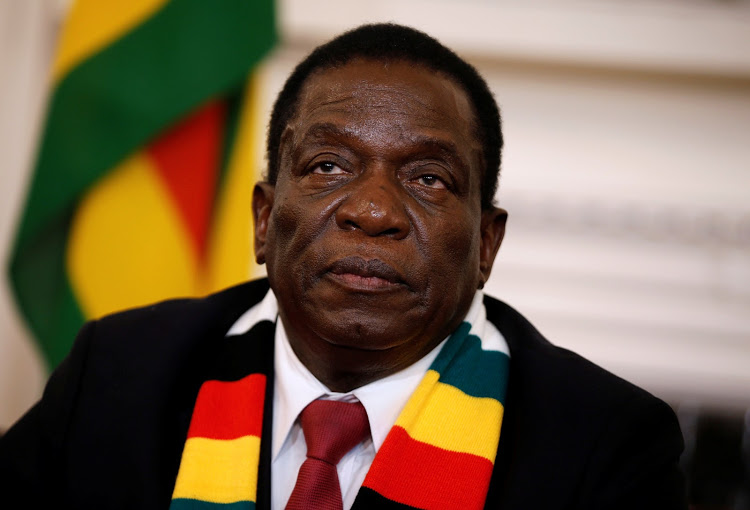
Zimbabwe’s President Emmerson Mnangagwa looks on as he gives a media conference at the State House in Harare, Zimbabwe, August 3, 2018. REUTERS/Philimon Bulawayo
Zimbabwe’s upper house of parliament on Wednesday approved a bill to extend presidential terms from five to seven years, allowing current President Emmerson Mnangagwa to remain in office until 2030.
Critics say the bill is a ruse for Mnangagwa to stay in power for longer, though its backers say it will strengthen accountability and foster political stability.
75 senators voted in favour of the draft legislation while four voted against it, above the threshold needed for a two-thirds majority.
The bill, which also includes a provision for the president to be elected by parliament rather than by direct popular vote, will become law when Mnangagwa signs it.
Evidence that Mnangagwa, 83, wanted to stay in power beyond the end of his second term in 2028 emerged about two years ago, when his supporters started chanting slogans at ZANU-PF rallies that he needed more time to complete his agenda.
The ruling party last year resolved to change the constitution to prolong presidential terms and the plan received cabinet backing in February.
Mnangagwa came to power after a 2017 military coup ousted longtime leader Robert Mugabe, who had been in power since independence in 1980.
DISCLAIMER: The Views, Comments, Opinions, Contributions and Statements made by Readers and Contributors on this platform do not necessarily represent the views or policy of Multimedia Group Limited.
DISCLAIMER: The Views, Comments, Opinions, Contributions and Statements made by Readers and Contributors on this platform do not necessarily represent the views or policy of Multimedia Group Limited.