
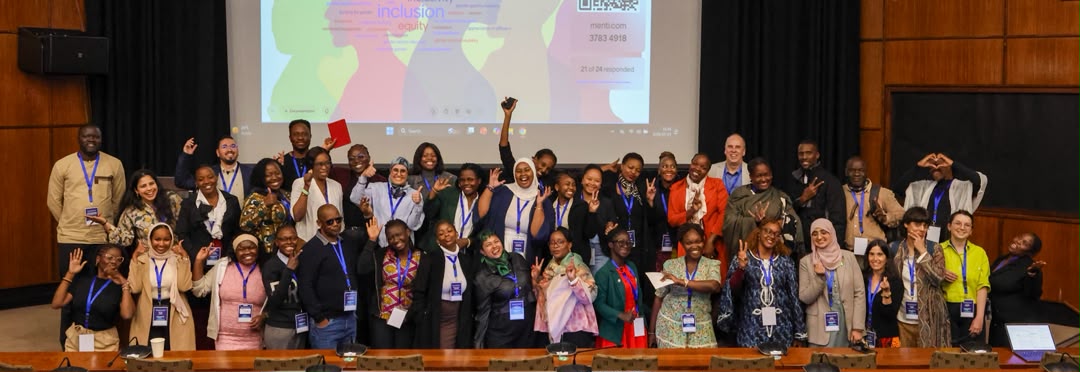
Women across Africa are calling for air quality policies that better reflect the realities they face, arguing that gender differences in pollution exposure have been overlooked for far too long.
Speaking to Michael Asharley on Clean Air Report Ghana at the Africa Clean Air Forum in Pretoria, South Africa, experts and advocates said women often bear a disproportionate share of air pollution because of traditional caregiving roles, cooking with polluting fuels and occupations that expose them to harmful emissions.
Head of Global Initiatives at the Health Effects Institute, Dr. Pallavi Pant, said exposure to air pollution is shaped by where people live, work and the roles they play in society.
“In many societies around the world, women are the primary caregivers for their families. So they’re cooking in many cases with polluting fuels like wood and charcoal and animal dung. They are also often employed… in occupations that may have higher exposure.”
She explained that although air pollution policies increasingly focus on cleaner transport and better urban planning, they often overlook the everyday realities women face.
“When we begin to think about policies and actions and interventions, we’re not necessarily thinking about gender in the same way.”
She pointed to issues such as women’s safety, childcare responsibilities and access to public transport, saying these considerations are often left out when designing clean air policies.
Dr. Pant said those experiences also shaped the creation of the Women in Air Quality initiative.
She recalled facing several gender-related challenges throughout her career, including moments when she was not taken seriously simply because she was a woman. While she had friends she could rely on personally, she realised she lacked a similar professional support system.
That feeling became even stronger during an air quality conference in India before the COVID-19 pandemic, where she and several female colleagues discussed the absence of women on expert panels despite the many accomplished women already working in the field.
Those conversations led to the creation of a simple WhatsApp group in March 2020. What started as a small network for women working on air quality in South Asia has since expanded into Africa and now connects scientists, journalists, policymakers, architects, communicators, activists and students working to improve air quality across both regions.
Describing the network, Dr. Pant said:
“The idea is to have this informal, welcoming space where we can talk about our work… It really is a place to find community, to find support, but also to find inspiration.”
Among those helping to grow the African network is Priscah Adrine Murabaca, a communications specialist from Uganda.
Murabaca said she grew up in a rural community where cooking with firewood was simply part of everyday life. Like many families, she never questioned the smoke filling their homes.
“Before then, I had no idea. I grew up in a rural village. We used to cook with firewood… I thought it was normal.”
It was only after entering the air quality field that she began connecting household smoke with serious health impacts on women and children.
Today, she works with communities to promote practical solutions for women who cannot yet afford cleaner cooking fuels, encouraging simple changes such as opening windows or cooking outdoors where possible.
She believes one of the biggest obstacles to policy action is the lack of integrated evidence linking women’s health with pollution exposure.
“We have livelihood data, we have health data, we now have air pollution data, but all these three are not speaking to each other… If we have such numbers, we’re able to advocate better.”
For Kenyan architect Mariam Wangeshi, the journey into clean air advocacy began inside the design studio.
She only began to appreciate the connection between architecture and air pollution after hearing criticism that architects often focused on attractive buildings without considering waste management or public health.
That experience completely changed how she viewed her profession.
“I came to understand that while we are there to make money, I also have a duty and a responsibility to practise around protecting health, especially women and children’s health.”
Today, she advocates for cities that reflect how women actually live, raising children, commuting, working and caring for families, and believes those realities should influence planning decisions.
She also called for more gender-specific research.
“It’s time to now disaggregate the data… let’s make it more specific.”
Meanwhile, South African environmental justice activist Ranela Ngobile said her passion for clean air stems from personal experience.
Growing up in Mpumalanga, one of South Africa’s largest coal-producing regions, she battled asthma every winter.
For years, she believed it was simply part of life.
Only after studying environmental science and joining environmental justice organisation GroundWork did she realise polluted air was contributing to the respiratory illnesses affecting her community.
“Me being here is because I don’t want other kids to also be so anxious but not know what is happening to them.”
Today, she works with communities affected by industrial pollution, educating residents about the links between air pollution, health and climate change while advocating for stronger enforcement of environmental laws.
She also believes women deserve a stronger voice in shaping environmental policy.
“We need to empower women and ensure that women are put in the forefront.”
The growing network is also inspiring a new generation of women entering the field.
Tino Muponde, a Master’s student in Public Health specialising in Environmental Health at the University of Cape Town whose research focuses on Just Transition, said attending the Women in Air Quality meeting in Pretoria showed the strength of women coming together around a common cause.
“It was empowering to be in the meeting of Women in Air Quality in Pretoria.”
She added:
“It was affirming that let’s continue taking up space as women and advocating for a right to clean air and a right to a clean environment.”
Muponde believes collaboration will strengthen the movement.
“There is power in numbers.”
She also encouraged more women to consider careers in the field.
“It is a promising field to be a woman working in Air Quality.”
For Sasha Nannyange, who works with AIRQo, clean air remains an overlooked issue despite its impact on millions.
“Air Quality is a minority in its own way. Hasn’t been prioritised.”
She said women are often the most exposed to polluted air and should therefore be central to designing solutions.
“Women are the most affected.”
She added that future policies must deliberately include women.
“It is important to bring the gender perspective to these conversations as well… creating solution with women in mind and bringing women into the rooms where these decision are made.”
The women agreed that clean air solutions cannot succeed if they ignore women’s lived experiences.
Whether it is exposure from cooking with biomass fuels, working in roadside markets, caring for children or navigating cities that often fail to consider women’s safety, they say gender must become part of both research and policymaking.
Although still informal, the Women in Air Quality initiative has already become a platform where women find mentors, research collaborators, funding opportunities and professional support. Members also recommend one another for conferences, media interviews and international panels, helping ensure women’s expertise is increasingly visible in global clean air conversations.
Looking ahead, Dr. Pant hopes the initiative grows into a fully resourced organisation capable of supporting women across Africa and Asia while influencing cleaner, more inclusive air quality policies.
“My goal is that we formalize this network and we secure resources that allow us to do that on a very consistent basis.”
For the women leading that effort, improving air quality is about more than cleaner skies. It is about ensuring the people most affected by pollution are finally part of the conversation, and the decisions that shape the solutions.
This story was a collaboration with New Narratives. Funding was provided by the Clean Air Fund which had no say in the story’s content.
END.
DISCLAIMER: The Views, Comments, Opinions, Contributions and Statements made by Readers and Contributors on this platform do not necessarily represent the views or policy of Multimedia Group Limited.
DISCLAIMER: The Views, Comments, Opinions, Contributions and Statements made by Readers and Contributors on this platform do not necessarily represent the views or policy of Multimedia Group Limited.
Source link