
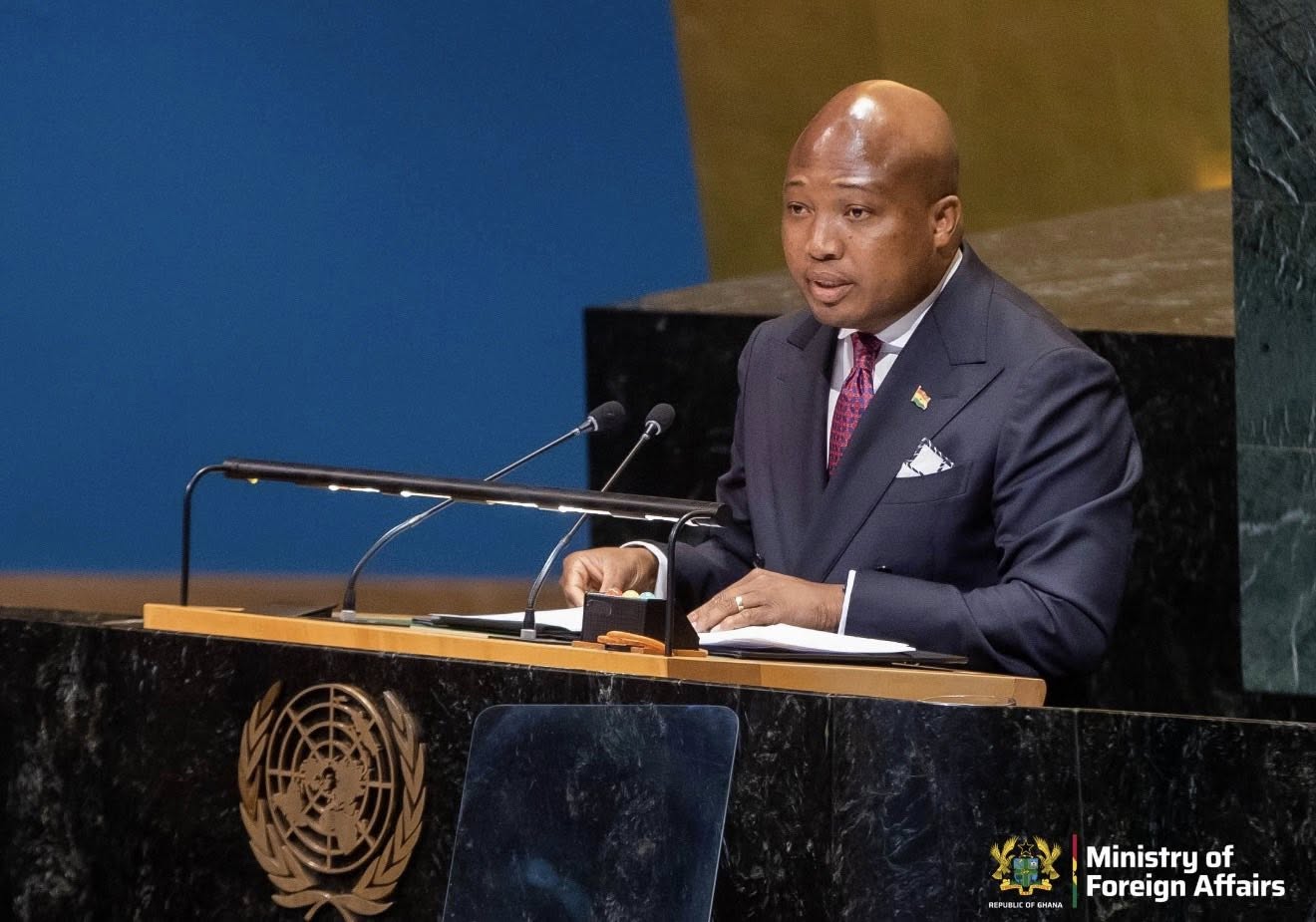
Foreign Affairs Minister Samuel Okudzeto Ablakwa says Africa’s campaign for reparatory justice over the transatlantic trafficking and enslavement of Africans is not primarily about securing cash payments from Western countries.
Rather, he said African countries were seeking meaningful support for policies, programmes and development initiatives capable of addressing the enduring consequences of slavery and historical inequalities, particularly through investments in the continent’s young people.
Mr Ablakwa made the remarks while responding to questions from the international press in Moscow about the kind of world Ghana and its partners hoped to build following the adoption of a landmark United Nations resolution declaring the trafficking of enslaved Africans and racialised chattel enslavement as the gravest crime against humanity.
Details of the engagement were released on Sunday, August 23, to mark the International Day for the Remembrance of the Slave Trade and its Abolition.
He stressed that the reparatory justice campaign should not be reduced to demands for direct financial payments to African governments.
Instead, he said, Africa wanted Western partners to support causes and initiatives that could help correct historical inequalities, expand opportunities and reposition the continent for sustainable development.
“Reparatory justice goes beyond financial compensation. Of course, it is legitimate, and we are not saying give African leaders financial payments. We are not interested in the money of the West; we are saying support causes.
“And that is why we commend what the Archbishop of Canterbury has done, announcing a hundred million pounds to support causes of young Africans, young entrepreneurs to go into businesses and invest. That is the kind of arrangement we want to see,” he said.
Historic UN resolution
Ghana has been at the forefront of efforts to advance reparatory justice for Africa and people of African descent.
On March 25, 2026, the United Nations General Assembly adopted Resolution A/RES/80/250, declaring the trafficking of enslaved Africans and racialised chattel enslavement of Africans as the gravest crime against humanity.
The Ghana-led resolution received the backing of 123 UN member states, while the United States, Israel and Argentina voted against it. Fifty-two countries abstained.
The resolution, championed by President John Dramani Mahama in his capacity as the African Union Champion for Reparations, also called for good-faith dialogue on reparatory justice and the restitution of cultural properties taken from affected countries.
Watch the video of the Minister’s comment below.
Accra hosts ‘Next Steps’ conference
Following the UN vote, Ghana hosted the High-Level Consultative Conference on the Next Steps to the Landmark UN Resolution in Accra from June 17 to 19, 2026.
The conference brought together political leaders, diplomats, academics, civil society representatives and members of the African diaspora to develop practical measures for translating the resolution into action.
At the end of the three-day meeting, participants adopted the Accra Next Steps Commitments on Reparatory Justice, outlining a framework covering cultural restitution, education, economic transformation, global governance reforms, debt relief, climate justice, technology access and stronger connections between Africa and its diaspora.
The conference also backed mechanisms to sustain the global reparatory justice campaign, including advisory, legal and cultural restitution structures.
Mr Ablakwa’s latest comments reinforce Ghana’s position that reparatory justice should go beyond direct financial compensation and focus on long-term interventions capable of addressing structural inequalities and creating a more equitable relationship between Africa and the rest of the world.
DISCLAIMER: The Views, Comments, Opinions, Contributions and Statements made by Readers and Contributors on this platform do not necessarily represent the views or policy of Multimedia Group Limited.
DISCLAIMER: The Views, Comments, Opinions, Contributions and Statements made by Readers and Contributors on this platform do not necessarily represent the views or policy of Multimedia Group Limited.
Source link