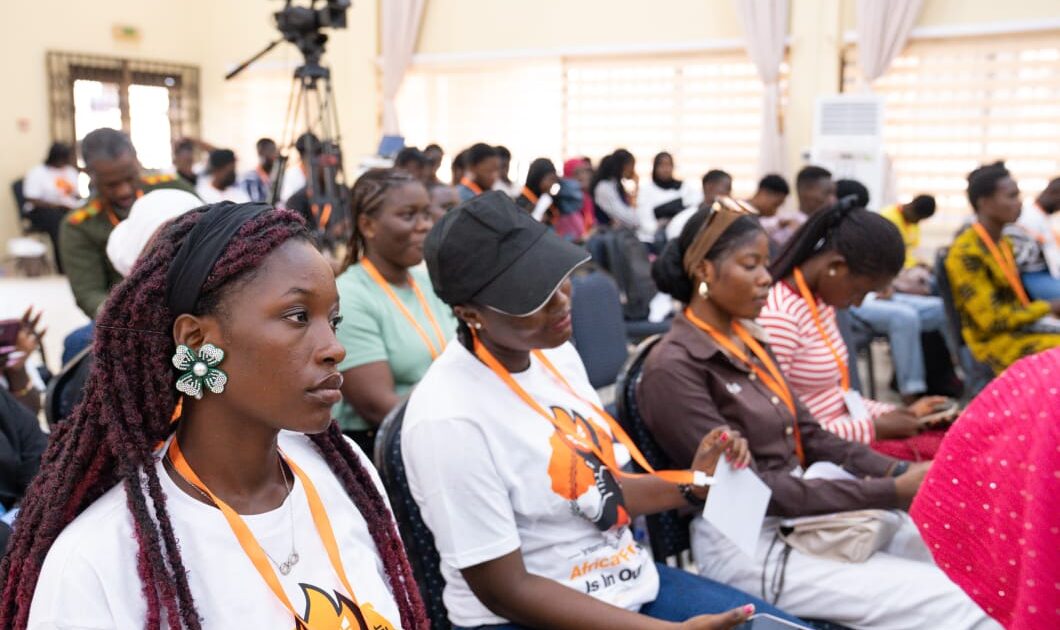
Young people from Ghana, Mali, Burkina Faso, Niger and other countries have declared their intention to build a united youth movement against what they describe as continued neocolonial exploitation and economic domination of Africa.
The youth adopted the Legon Declaration at the International Youth Forum, “Africa’s Freedom Is in Our Hands”, held at the ISSER Conference Hall in Accra on September 5, 2026.
The declaration took a strong position against the CFA franc, expressed solidarity with the Alliance of Sahel States (AES) and called for reparations for colonial-era injustices.
The delegates also demanded the auditing and cancellation of what they described as illegitimate debts imposed on African countries.
In their declaration, the group said they represented a generation that had inherited debts and economic systems it did not create.
“We are the generation that inherited a debt we did not create. We refuse that inheritance. We reclaim our future.”
A major concern raised by the delegates was the CFA franc, which they described as a symbol of continued economic dependence.
“The CFA Franc is not a currency of convenience. It is a leash,” the declaration stated.
The youth argued that monetary arrangements requiring African countries to deposit reserves in a foreign treasury restricted their ability to make independent economic decisions.
They consequently called for monetary sovereignty, describing it as “the bare minimum of nationhood”.
The delegates also expressed strong support for Mali, Burkina Faso and Niger, which form the AES, saying developments in the three countries represented a signal to progressive forces across Africa.
“The Alliance of Sahel States is not a threat; it is a signal to all progressive Africa,” they stated.
The group said the three countries’ attempts to reclaim control over their resources, currencies, security and narrative showed that African countries could pursue a different path.
They pledged to build stronger links between Ghanaian youth and young people from the AES countries, as well as similar movements across Africa and the diaspora.
The declaration also called for reparations for colonial-era injustices.
“Reparations are not charity. They are justice deferred,” the delegates stated.
They argued that wealth extracted from Africa, including gold, cocoa, cotton and uranium, had contributed to the development of institutions that now demanded debt discipline from African countries.
Beyond the declaration, the youth committed themselves to action.
They said they would organise peaceful demonstrations, flashmob actions and public campaigns, while using lawful means to expose and challenge what they described as mechanisms of colonial-era extraction.
They also pledged to establish a united network of youth movements committed to Africa’s independence and to carrying forward the unfinished work of Ghana’s first President, Dr Kwame Nkrumah.
The delegates said they would take the lessons from the forum to their campuses, communities and countries to educate other young people about colonial debt, the CFA franc and neocolonial extraction.
They further pledged to hold African leaders, institutions and themselves accountable for commitments made at the forum.
The declaration ended with a pledge to treat the gathering as the start of a wider campaign rather than an isolated event.
“We leave this hall in Accra carrying more than a document. We carry a resolve,” the delegates stated.
They said their objective was to ensure that the Africa they inherited would not be the same they handed over to future generations.
In a keynote address, renowned journalist and Pan-Africanist, Kwesi Pratt Jnr, challenged the youth to maintain the fight for reparations until victory is won.
He said the Resolution passed by the UN General Assembly to recognise transatlantic slave trade as the gravest crime against humanity in March this year was a great achievement which should spur Africans not to give up the reparations fight.
He also made reference to a recent victory over the way Africa and the world had traditionally been represented on maps.
According to him, the distorted representation of the continent had psychological consequences because it contributed to the perception that Africa was smaller and less significant than it actually was.
“We were made to think that we are a small continent,” he said, adding that the issue of Africa’s size had “a psychological impact”.
Mr Pratt said Africa was home to about 1.4 billion people and possessed enormous natural wealth, yet remained a victim of exploitation and oppression.
He, however, cautioned against measuring reparative justice by the return of artefacts or financial payments from Western countries.
“We are not going to count our victories by the number of bones that are returned to us from European museums,” he said.
“We will not count our victory by the checks which are issued from the metropolitan countries for a few dollars, pounds and euros.”
For him, the ultimate objective should be the creation of a world in which people were treated equally, regardless of their colour or geographical location.
“Our victory will come when we reset this world,” he said.
Mr Pratt directly linked Africa’s present predicament to the historical effects of the transatlantic slave trade.
DISCLAIMER: The Views, Comments, Opinions, Contributions and Statements made by Readers and Contributors on this platform do not necessarily represent the views or policy of Multimedia Group Limited.
DISCLAIMER: The Views, Comments, Opinions, Contributions and Statements made by Readers and Contributors on this platform do not necessarily represent the views or policy of Multimedia Group Limited.
Source link