
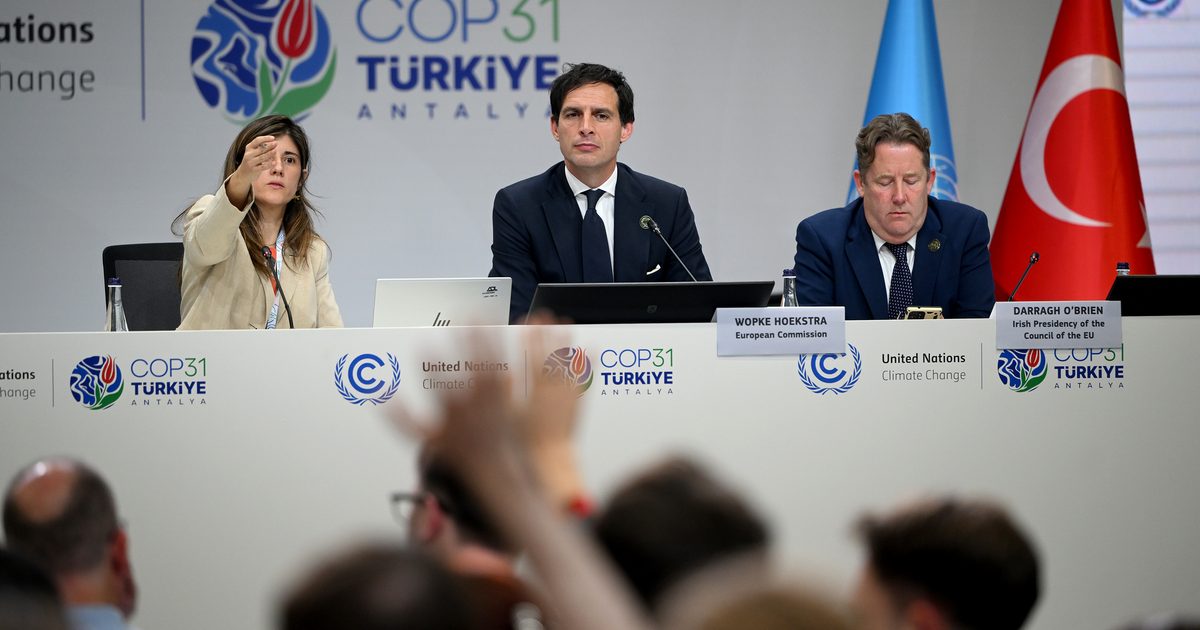
ANTALYA, TURKIYE – NOVEMBER 17: Darragh O’Brien (R), Ireland’s Minister for Climate, Energy and the Environment, representing the rotating Presidency of the Council of the European Union (EU), and Wopke Hoekstra (C), European Commissioner for Climate, Net Zero and Clean Growth, speak during a press conference organized by the European Commission as part of the 31st Conference of the Parties to the UN Framework Convention on Climate Change (COP31), at the Antalya COP31 Venue in Antalya, Turkiye, on November 17, 2026. The European Commission announced its support for Turkiye’s COP31 Presidency goal of increasing electricity’s share of global final energy consumption to 35% by 2035 (35×35). ( Gökhan Balcı – Anadolu Agency )
A final draft agreement at the United Nations climate talks in Antalya, Türkiye, has drawn objections from several countries and negotiating blocs over its failure to explicitly mention fossil fuels, the main driver of human-caused climate change.
The European Union, the Marshall Islands and Panama are among those opposing the proposed text, arguing that it falls short of the action required to address rising global temperatures and the worsening impacts of climate change.
The dispute has prolonged the COP31 negotiations, which have continued for more than 44 hours beyond their scheduled closing time, making them the longest climate talks to run past their expected deadline.
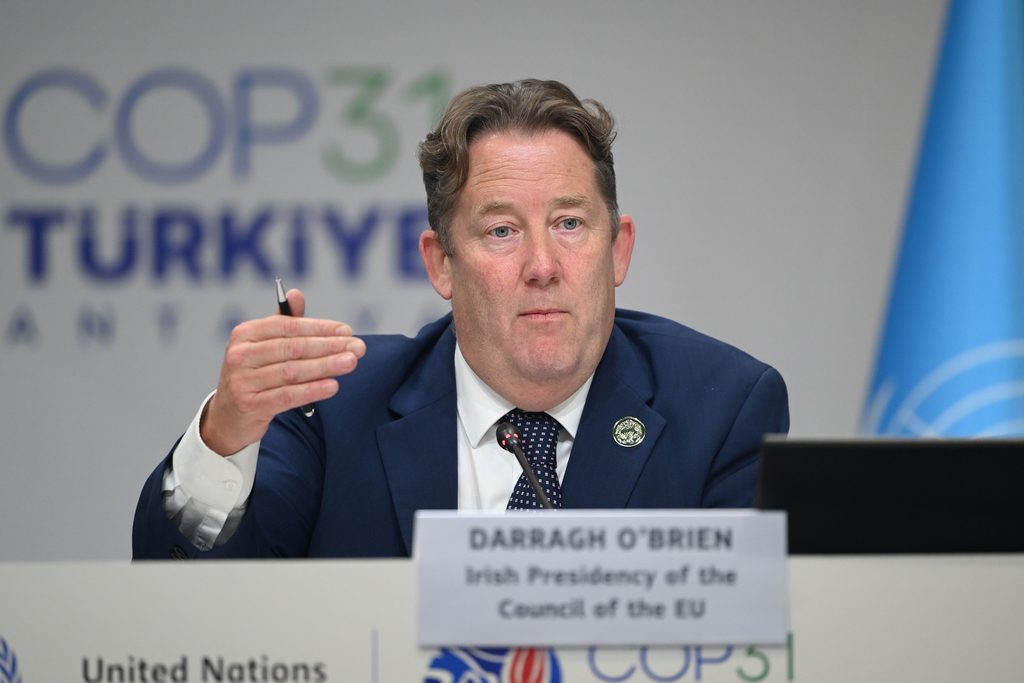
Ireland’s climate minister, Darragh O’Brien, speaking on behalf of the European Union, criticised the omission of fossil fuels from the proposed agreement.
“It’s unconscionable that we would have a climate act that makes no reference to fossil fuels.”
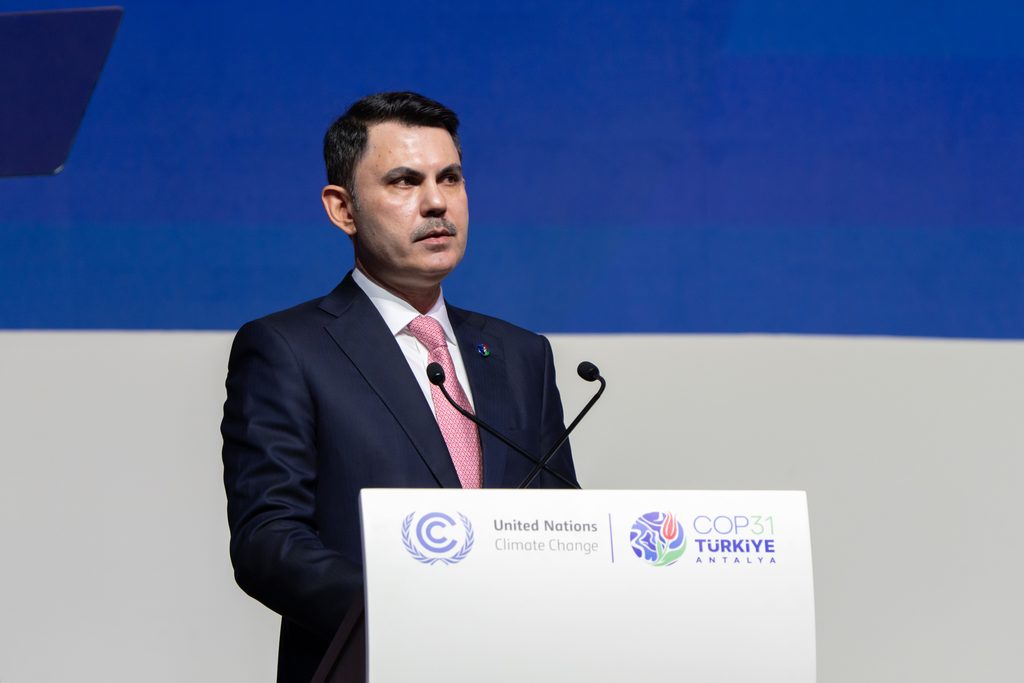
The draft, prepared by Turkish Environment Minister Murat Kurum, co-president of the two-week conference, was released in the early hours of Sunday, leaving delegates about three hours to raise objections or request changes before a final meeting was called.
Climate agreements require consensus among participating countries, making objections from opposing parties a significant obstacle to securing a final deal.
Fossil fuels divide countries over climate action
The proposed agreement refers to the 2023 Dubai deal, which called for transitioning away from fossil fuels, but does not explicitly mention fossil fuels, oil, coal or a phase-out anywhere in its 10-page text.
The omission has revived concerns over whether countries remain committed to implementing the outcome reached at COP28 in Dubai.
Alden Meyer, of climate think tank E3G, said fossil fuels had been absent from COP final decisions for more than 25 years until the Dubai agreement introduced language on transitioning away from them.
He warned that failing to reaffirm that commitment could undermine progress made at previous negotiations.
“It would be a real setback if we come out of here with no signal that we were serious about what we agreed to do three years ago.”
Russia, however, has supported leaving explicit references to fossil fuels out of the final agreement, highlighting the divisions among countries over how far the negotiations should go in addressing the production and use of coal, oil and gas.
Panama has also threatened to formally object to any final agreement that does not address its demands, including a cap on oil production, recognition that existing warming targets are failing, and increased financing for developing countries to adapt to climate change.
Earlier in the week, Panama’s environment minister, Juan Carlos Navarro, accused the negotiations of being held hostage by a “petroleum mafia” and called for reforms to the climate process.
Carbon capture proposal raises concerns
While the draft avoids explicit references to fossil fuels, it proposes a target to support technologies that capture carbon dioxide emissions and store them.
The proposal calls for capturing, reusing and storing one billion metric tonnes of carbon, an approach intended to help industries that face difficulties reducing emissions through a switch to renewable energy.
Carbon capture and storage involves capturing carbon dioxide from industrial processes or other sources before it enters the atmosphere, transporting it and storing it underground or through other approved methods.
However, the technology remains contentious in climate negotiations, with concerns that it could be used to justify continued investment in fossil fuel infrastructure instead of rapidly reducing dependence on coal, oil and gas.
Rachel Cleetus, of the Union of Concerned Scientists, said the world could not limit the extent of global warming without a rapid reduction in fossil fuel use.
“Fossil fuels are the root cause of climate change, and there is no plausible pathway to limit climate overshoot without rapidly phasing them out.”
Electrification target included in the draft
The proposed agreement also includes Türkiye’s electrification target, which seeks to increase electricity’s share of total final energy consumption from approximately 21 per cent currently to 35 per cent by 2035.
Achieving the target would require countries to expand the use of electricity in sectors that largely depend on fossil fuels, including transport and industrial production.
This could involve replacing petrol and diesel-powered vehicles with electric alternatives and using electricity instead of coal in certain industrial processes.
Climate campaigners, however, are demanding that the agreement make clear that the electricity powering this transition must come from renewable sources, including wind and solar.
They argue that expanding electricity consumption without decarbonising its generation could undermine the climate benefits of electrification, particularly in countries where power generation remains heavily dependent on coal and gas.
Bill Hare, chief executive of Climate Analytics, said electrification alone would not be sufficient to reduce global warming if fossil fuels continued to power electricity generation.
“Electrification that runs on coal and gas does not limit warming.”
DISCLAIMER: The Views, Comments, Opinions, Contributions and Statements made by Readers and Contributors on this platform do not necessarily represent the views or policy of Multimedia Group Limited.
DISCLAIMER: The Views, Comments, Opinions, Contributions and Statements made by Readers and Contributors on this platform do not necessarily represent the views or policy of Multimedia Group Limited.
Source link