
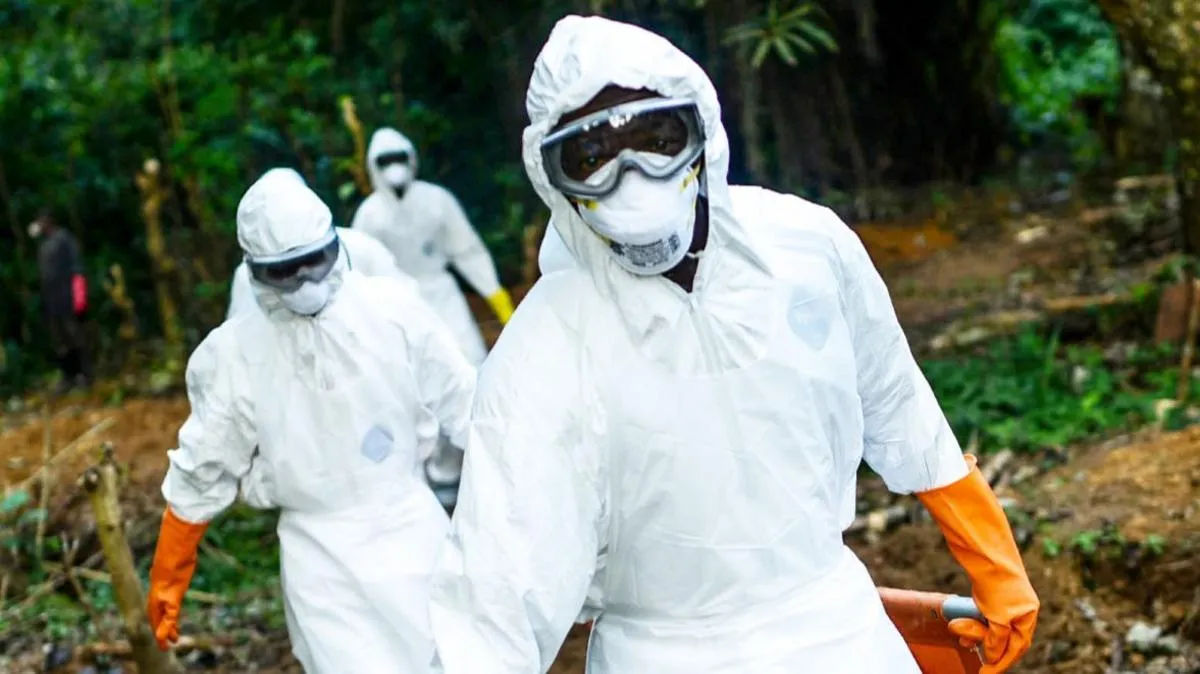
The Ebola outbreak is posing massive challenges for medical aid organisations, a senior humanitarian official has said.
Kate White, who is a programme manager for the charity Médecins Sans Frontières (MSF), and is flying out to the Democratic Republic of Congo, says she is “extremely concerned about the inability to get resources” to the country.
Three Red Cross volunteers who died earlier this month were among the first known victims of DR Congo’s Ebola outbreak, and likely caught it while managing dead bodies.
The outbreak has resulted in more than 200 suspected deaths and more than 850 suspected cases.
White, who flew from Manchester Airport on Sunday as part of an international relief effort, said: “It really reinforces the need to make sure that we have all of the protective measures in place.”
The World Health Organisation (WHO) recently said the disease may be spreading faster than originally thought and has declared a public health emergency of international concern.
There is no approved vaccine for this outbreak, experimental ones are in development.
There are also no drugs that target it, making the illness harder to treat.
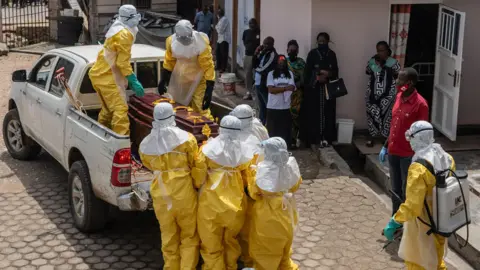
White, from York, who has worked on previous Ebola epidemics in Africa, said: “In terms of how many years we have been seeing these outbreaks for and we still don’t have comprehensive medical countermeasures… [treatment, vaccines, diagnostic testing that can be rolled out rapidly] says something about the state of the world right now.”
She added that she was also concerned about the impact of airspace closures on the transport of healthcare workers and resources to affected areas.
“The pure volume of what we need to get in right now is massive.”
Improvements in the ability to confirm cases were required “across all of the geographic areas where it’s impacting because we don’t want people stuck in treatment centres if they don’t have it”, she said.
“We want to be able to discharge them as soon as they recover from it so they can go back to their families, and we’re not there yet.”
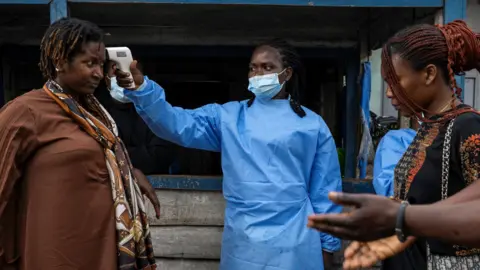
What is Ebola and what are the symptoms?
Ebola is a rare but deadly disease caused by a virus.
Ebola viruses normally infect animals, but outbreaks among humans can sometimes start when people eat or handle infected animals.
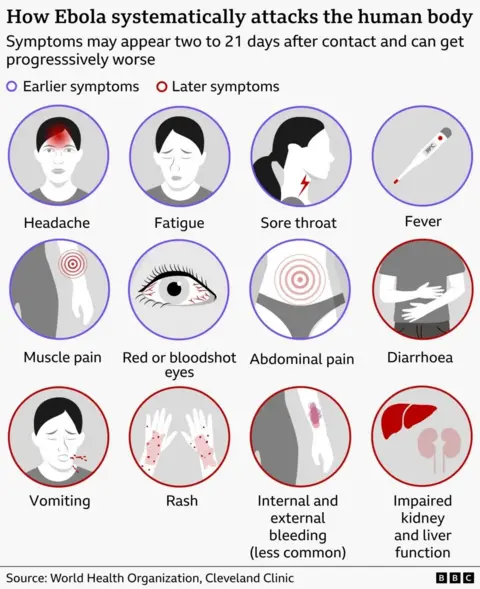
It takes two to 21 days for symptoms to appear. They come on suddenly and start like the flu or malaria, with fever, headache and tiredness.
As the disease progresses, vomiting and diarrhoea develop and it can lead to organ failure. Some, but not all, patients develop internal and external bleeding.
The virus spreads from one person to another by contact with infected bodily fluids such as blood or vomit.
Ebola outbreaks used to be small and contained to remote rural areas. However, urbanisation is pushing larger populations closer to these natural reservoirs of Ebola and increasing the risk of transmission.
The latest outbreak is challenging because it involves a rare species of Ebola for which there is no vaccine, and the epicentre is in an area affected by conflict.
“This [outbreak] has been going on for a substantive period of time before it was picked up, which means we don’t fully understand the chains of transmission,” White added.
“When we don’t fully understand that, it becomes much more difficult to get it under control.”
DISCLAIMER: The Views, Comments, Opinions, Contributions and Statements made by Readers and Contributors on this platform do not necessarily represent the views or policy of Multimedia Group Limited.
DISCLAIMER: The Views, Comments, Opinions, Contributions and Statements made by Readers and Contributors on this platform do not necessarily represent the views or policy of Multimedia Group Limited.
Source link