
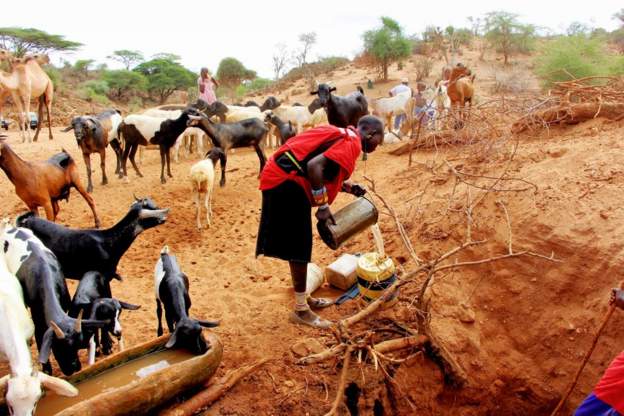
Millions of Kenyans are affected by the drought ravaging many parts of the country
Millions of people across East Africa and Asia could face severe flooding, disease outbreaks, heatwaves and drought in the coming months as an intensifying El Niño weather pattern gathers strength, the International Rescue Committee (IRC) has warned.
The humanitarian organisation says communities in Somalia, Kenya, Uganda, Bangladesh, Pakistan and Afghanistan are among those most at risk, urging governments and international donors to invest in early action before disasters strike.
Somalia is expected to be among the hardest-hit countries. According to the IRC, June forecasts indicated a 60% chance of above-average rainfall across the country’s south and southwest, while a key weather update due on 15 July is expected to shape funding decisions and emergency preparedness efforts.
The warning comes as Somalia continues to grapple with the combined effects of prolonged drought and mass displacement. The IRC estimates that 4.8 million people already require urgent humanitarian assistance, with that figure expected to rise if heavy rains trigger widespread flooding.
The organisation said floods in 2023 destroyed nearly 13,000 tonnes of crops and caused extensive damage to towns and cities. It warned that another major flooding event could have even more devastating consequences because many communities have exhausted their ability to cope after successive climate shocks and reductions in humanitarian funding.
Heavy rainfall in Ethiopia’s highlands, combined with seasonal Deyr rains, could also cause rivers in Somalia to overflow, contaminating water supplies and increasing the risk of cholera and acute watery diarrhoea outbreaks.
The IRC said the threat extends across the wider East African region. “The anticipated impacts are regional as Kenya faces an 80–82% chance of El Niño persisting through 2026, with dry conditions this summer giving way to a high risk of flooding and landslides later in the year, prompting the government to activate its national response framework,” the statement said.
Uganda is also expected to experience a transition from dry conditions to heavy rainfall later in the year, raising concerns over flooding, displacement and disease. More than 413,000 people were affected during the country’s previous El Niño episode.
“We’re watching several emergencies converge at once, and the places least equipped to absorb another shock are the ones in the crosshairs,” said Bob Kitchen, IRC Vice President for Emergencies.
“Acting now, before the rain falls, is far cheaper and far more humane than responding after people have lost everything.”
In Asia, the weather pattern is expected to bring contrasting but equally severe impacts. Pakistan is forecast to experience below-normal seasonal rainfall alongside rising temperatures, while northern mountainous regions face an increased risk of sudden floods caused by rapid glacier melt.
Bangladesh has already seen deadly monsoon rains this year. According to the IRC, landslides and flooding have killed at least 15 Rohingya refugees in camps at Cox’s Bazar and displaced more than 10,000 people since the beginning of July.
Afghanistan is also expected to receive above-average rainfall under El Niño conditions, placing large parts of the country at risk of flooding.
The IRC says it has expanded its anticipatory action programmes in vulnerable areas, providing cash assistance to families before disasters occur. The support enables households to buy food, secure clean water and protect livestock, helping them avoid difficult decisions such as withdrawing children from school or arranging early marriages for their daughters.
The organisation is calling on governments and international donors to increase funding for anticipatory action across East Africa and Asia, arguing that early investment in cash support, clean water supplies and early warning systems can save lives, reduce suffering and limit the long-term impact of climate-related disasters.
DISCLAIMER: The Views, Comments, Opinions, Contributions and Statements made by Readers and Contributors on this platform do not necessarily represent the views or policy of Multimedia Group Limited.
DISCLAIMER: The Views, Comments, Opinions, Contributions and Statements made by Readers and Contributors on this platform do not necessarily represent the views or policy of Multimedia Group Limited.