
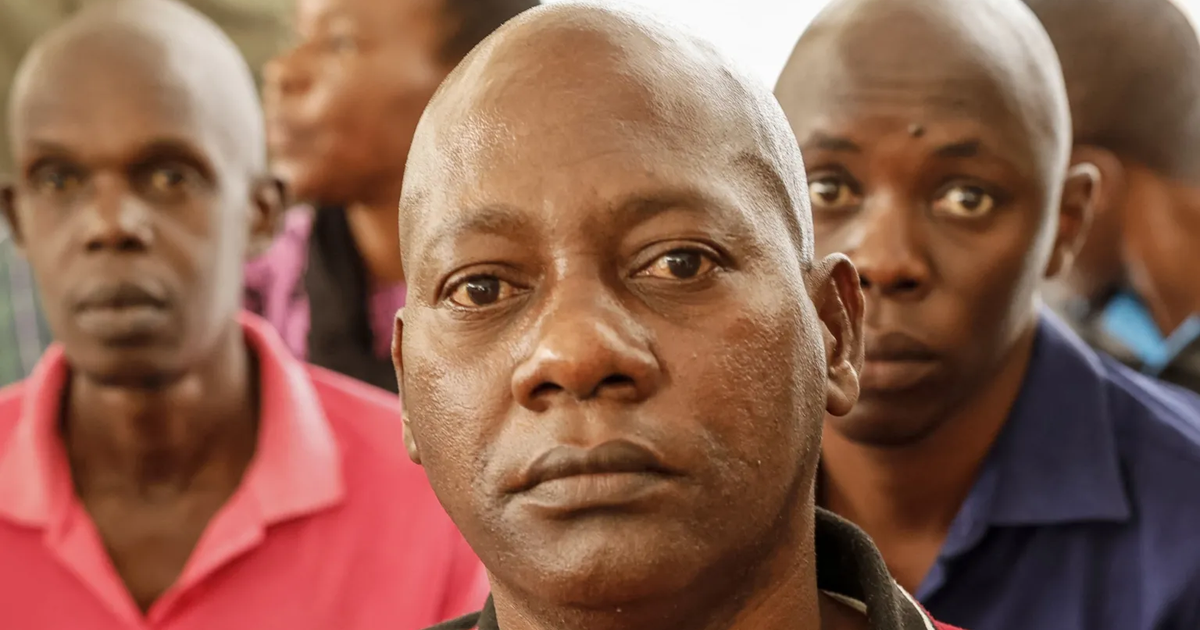
The leader of a Kenyan doomsday cult, Paul Mackenzie, has been found guilty of murdering 191 people, all but one of them children.
Mackenzie ordered members of his cult to starve their children to death so they could “meet Jesus”.
His doctrine said that education was forbidden and modern medicine was “evil”.
Twenty-eight other leaders of his cult were also convicted of murder. They had all pleaded not guilty, repeatedly insisting that nobody was forced to die.
Warning: This article contains details which some people might find distressing.
Delivering her eight-hour judgement in the port city of Mombasa, Justice Diana Mochache said Mackenzie’s followers believed he was “Jesus’s mouthpiece”.
One of his co-accused said Mackenzie had told his followers that anyone who “resisted the directive to fast must be forced to go to heaven through kicks and blows”.
Burials inside the forest where the cult was based were called “weddings”. Those who died “were celebrated as having wedded with Jesus”, the judge said.
One witness stated that a pregnant woman had been barred from nursing her newborn baby, who died 12 days later. “She was instructed to fast to death and follow her children,” the witness said.
Mackenzie’s former head of security, Enos Amanya Ngala, was initially accused but then entered a plea deal and became a witness for the prosecution.
Mackenzie and other leaders of the cult also face a raft of other legal cases, including for terrorism, radicalisation and denying education to children.
But this is the first time the pastor has faced a verdict on the most serious charges of murder. He is due to be sentenced on 6 November.
He was arrested in 2023, after the discovery of more than 400 bodies in shallow graves in Shakahola forest near the Kenyan coast, where Mackenzie had led his followers from across the country.
Stephen Mwiti, 48, said he lost all six of his children to the cult. His former wife was one of those convicted of murder alongside Mackenzie.
“I’m a happy man, that all persons have been convicted,” he told the BBC outside court.
“All six of my children died in Shakahola forest,” Mwiti said ahead of the verdict, visibly emotional, holding a photograph of his family. “I only found and buried the remains of my son Samuel.”
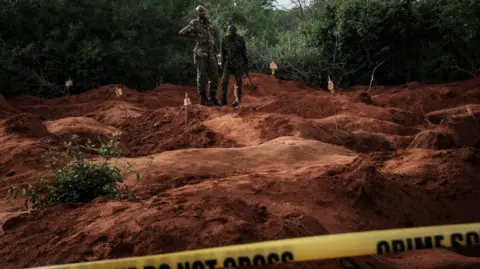
Seventeen men were hired from the nearby town for the horrifying task of digging up the shallow graves. Some were paid just $8 (£6) a day.
“Every grave we found had at least three bodies,” James, one of the gravediggers, told the BBC. “Some of the remains were of children as young as a few weeks old.”
“We once found 12 bodies of children in a line inside a grave. It was massive; the bodies were arranged like clothes. One on top of another.”
Gravediggers described some of the bodies of children as having had their “hands and legs tied and bodies wrapped in bedsheets”.
Although many of Mackenzie’s followers were from elsewhere in Kenya, some of the remains are from people who were familiar to the community, as members of the cult often went to nearby Shakahola town for supplies and to fetch water from the River Galana, which flows through the town.
“We would sometimes carry people on our motorbikes into the forest,” said Salim Karisa, another gravedigger. “But it was so planned and secretive that nobody could tell what was happening inside.”
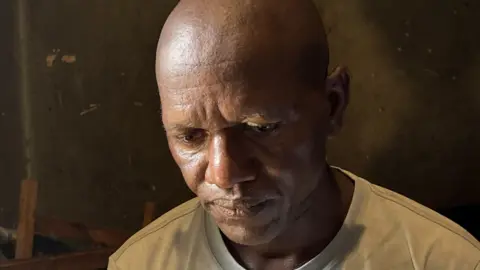
Mackenzie established Good News International Ministries in 2003. Over the next 16 years, the church grew in popularity, drawing thousands of followers to its branches across Kenya.
His church ran a television station called Times TV, which broadcast his sermons from Malindi.
His End Days sermons included conspiracy theories that described education as “evil”, healthcare as “against the doctrine” and digital identity cards as “the mark of the devil”.
Mackenzie’s son, Dan Paul Mackenzie, said he worked as a cameraperson in the church. “The children would sit at the back, adults in the middle, and everyone would sing worship songs all morning.”
The self-proclaimed pastor would start his fiery sermons at noon, some of which included “casting out demons”.
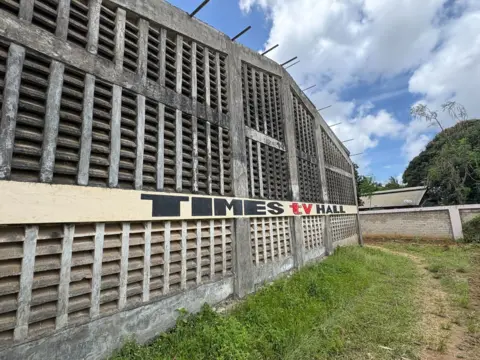
The main church shut down in 2019, and Paul Mackenzie moved to Sthe hakahola forest, encouraging his followers to follow him.
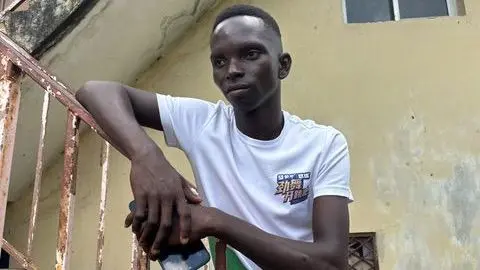
Peter Shukrani, 23, says his mother relocated to Shakahola with him at the time. He started going to Mackenzie’s church when he was eight years old and described him as his “spiritual father”, adding that he would “never say a bad word about him”.
When in the forest, Shukrani fell ill, and his condition deteriorated because medication was banned.
“My mother would throw away all the medicine I was supposed to take because she believed that only God could heal me,” Shukrani said.
The community was described as mud houses scattered across the vast forest. “We lived a quiet normal life, fasting for a few days then having a small meal,” Shukrani said.
By March 2023, when the first remains were discovered by local herders, hundreds of people had died. “We would carry someone out of the forest, but they were so frail that they would die in our arms,” explained Salim Karisa, one of the gravediggers.
Shukrani was one of the men rescued from the forest.
He was ill and bedridden for weeks until that point, but his condition worsened because his mother would throw away all the medication he needed to recover.
“My mother believed Pastor Mackenzie’s doctrine that medicine was evil,” Shukrani said.
“I would have died if I wasn’t rescued from Shakahola forest.”
Many of the bodies are still unidentified owing to their advanced state of decomposition.
In the court documents, several are referred to as “unknown male child” and identified by the location of their grave and date of their discovery.
Despite the suffering endured by Mackenzie’s followers, men, women and children who died due to starvation, strangulation and even being bludgeoned to death, as well as his own suffering, Shukrani believes Mackenzie was “a good person who cares for me”.
“Mackenzie didn’t force anyone to fast. People made those choices by themselves because of their beliefs,” Shukrani said before the verdict was announced.
“I still love him and he is still my pastor.”
In contrast Dan Mackenzie believed his father should be found guilty of murder.
“He was the leader, he was someone who they were looking [up to]. So he is a murderer of mass killing,” also speaking before the verdict.
DISCLAIMER: The Views, Comments, Opinions, Contributions and Statements made by Readers and Contributors on this platform do not necessarily represent the views or policy of Multimedia Group Limited.
DISCLAIMER: The Views, Comments, Opinions, Contributions and Statements made by Readers and Contributors on this platform do not necessarily represent the views or policy of Multimedia Group Limited.
Source link