Morocco has outlined plans to support household purchasing power, expand social protection and tackle youth unemployment under its Draft Finance Bill for 2027.
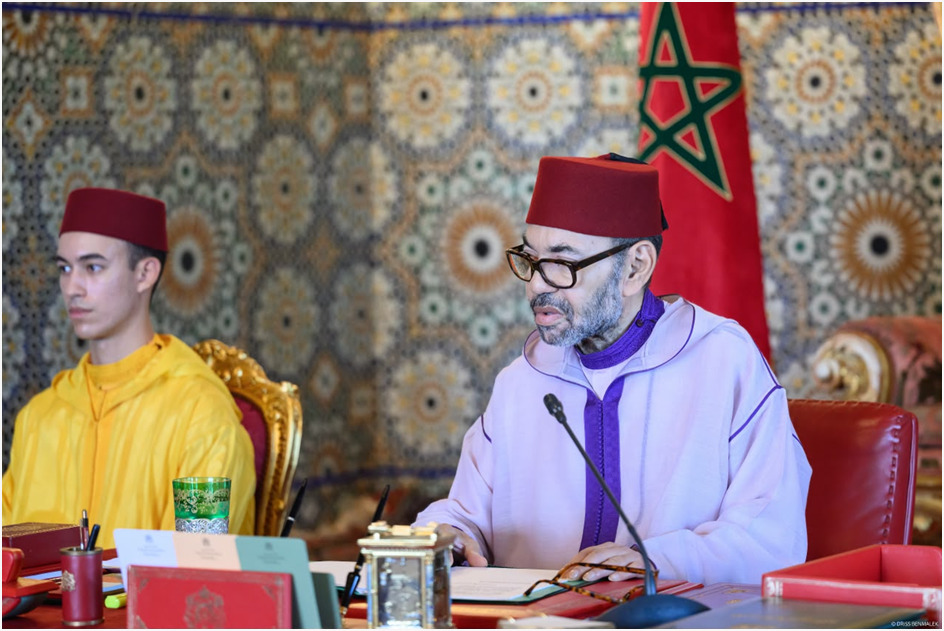
King Mohammed VI, accompanied by Crown Prince Moulay El Hassan, chaired a Council of Ministers meeting at the Royal Palace in Rabat on Saturday, October 17, to examine and adopt the bill’s general guidelines, according to a Royal Office statement.
Presenting the proposals, the Minister of Economy, Finance and Public Performance said the budget was being prepared against a volatile international backdrop marked by geopolitical conflicts, rising protectionism and competition for energy, technology and financing.
According to the statement, Morocco’s economy is projected to grow by 4.7% in 2026, with inflation at 0.7% and the budget deficit expected to narrow to 3% of gross domestic product.
The 2027 budget framework sets out five priorities: social protection, youth opportunities, regional development, strategic security, and economic growth.
Purchasing power and social protection
The government plans to begin market and price reforms in 2027 to support purchasing power.
Other measures include expanding health coverage while safeguarding the system’s financial sustainability, increasing direct social assistance, and improving public health and education services.
The proposals also seek to improve access to decent housing through the country’s direct housing assistance programme.
Youth training and employment
An integrated national youth programme covering 2027–2031 is planned to connect education and training with employment and entrepreneurship opportunities.
The programme will include business incubation and measures to improve access to finance, credit guarantees and markets.
According to the statement, the government intends to move beyond fragmented, sector-based programmes to a coordinated policy that supports young people through education, training, employment, and housing.
Regional development
The budget will also support transferring responsibilities to regional authorities, with an emphasis on clearer roles and stronger coordination between central government and the regions.
The proposals include implementing the National Charter on Administrative Decentralisation and accelerating a new generation of integrated territorial development programmes.
The government plans to allocate approximately 25 billion dirhams to these development programmes.
Water, energy, food and digital security
The government intends to strengthen water security, accelerate renewable energy development and continue its green hydrogen initiative.
The proposals also call for the gradual implementation of a natural gas infrastructure roadmap, along with measures to improve food security and strengthen national control over critical digital systems.
Investment and economic growth
The fifth priority is to build an economy that can finance Morocco’s social programmes and strategic ambitions while maintaining fiscal and macroeconomic stability.
The government plans to mobilise funding for ongoing projects, major development initiatives and sector-specific strategies, while supporting new strategic industries.
The government will give particular attention to private investment through support measures under the Investment Charter and continued reform of Regional Investment Centres.
The proposals also emphasise support for micro, small and medium-sized enterprises as part of efforts to strengthen economic activity and employment.
DISCLAIMER: The Views, Comments, Opinions, Contributions and Statements made by Readers and Contributors on this platform do not necessarily represent the views or policy of Multimedia Group Limited.
DISCLAIMER: The Views, Comments, Opinions, Contributions and Statements made by Readers and Contributors on this platform do not necessarily represent the views or policy of Multimedia Group Limited.
Source link