

By Dr. Akwasi Agyeman Britwum Economist | Chartered Accountant | Banker | Lead Consultant and Founder, Acuity Benchmark |
In an old Aesop fable, passed down through ancient Greek storytelling tradition, a farmer once discovered that his goose was laying golden eggs. Each morning brought a new source of steady wealth and for a while, prosperity seemed almost effortless. Unfortunately, with time, patience gave way to suspicion. Convinced that greater riches must be hidden inside the bird, the farmer made a fatal decision. Tragically fatal decision! He killed the goose. Inside, there was no hidden treasure but only the end of a system he never truly understood. The eggs stopped. The wealth stopped. Alas, and what was left was the irreversible cost of a moment’s violence against a living source of value.
South Africa is repeating an age-old mistake. In the name of protecting the economy, the real danger isn’t just a bit of disruption but it’s the wholesale destruction of the networks that actually keep the country running. We’re talking about the informal traders, the migrant entrepreneurs and the township supply chains that quietly hold the day-to-day economy together. Break those, and you break the foundation of everything else.
Are Migrants Really Taking South Africa’s Jobs?
At the heart of South Africa’s recurring anti-immigrant sentiment lies a powerful political narrative. It is that obnoxious belief that foreign nationals are displacing South Africans from jobs, businesses and economic opportunities. In a country that is burdened by chronic unemployment, that argument understandably resonates. However, economic facts consistently suggests that the relationship between migration and unemployment is far more complex than popular rhetoric implies.
South Africa’s unemployment crisis did not begin with migration. It is a structural problem decades in the making. According to World Bank estimates, South Africa has experienced one of the weakest growth trajectories among major emerging economies over the past decade. Real Gross Domestic Product (GDP) growth averaged less than 1% annually between 2014 and 2024, significantly below the level required to absorb new entrants into the labour force.
By the first quarter of the year 2026, the official unemployment rate had risen to approximately 32.7%, while the expanded unemployment rate, which includes discouraged job seekers remained above 40%. More than eight million South Africans were officially unemployed. This is a crisis certainly not birthed by migrants.
Research from the International Labour Organization (ILO), the World Bank and numerous South African universities suggest otherwise. Studies repeatedly find little evidence that immigrant workers are the primary cause of unemployment among South Africans. In many sectors, migrants and locals do not compete directly for identical jobs. Instead, migrants often occupy entrepreneurial niches, informal trading activities, specialised service roles or labour-intensive occupations that many local/indigenous workers avoid.

The World Bank has consistently identified South Africa’s principal employment constraints as weak economic growth, chronic electricity shortages, rail and port inefficiencies, low investment levels, skills mismatches, labour market rigidities and policy uncertainty.
These structural constraints in their totality have suppressed job creation for years. Economists frequently note that unemployment is ultimately a symptom of insufficient economic expansion rather than the presence of foreign workers. An economy growing at less than 2% annually simply cannot generate enough opportunities for a rapidly expanding labour force regardless of migration levels.
Ironically, migrants often create employment rather than eliminate it. Evidence from township economies shows that many foreign-owned enterprises employ South African assistants, security personnel, transport operators, cleaners and suppliers. The relationship is therefore often complementary rather than competitive.
The uncomfortable reality is that migrants did not create South Africa’s unemployment crisis. They have become visible targets for frustrations generated by deeper economic failures that remain largely unresolved.
The Economic Contribution of Migrant Entrepreneurship
Perhaps, nowhere is the economic contribution of migrants more visible than in South Africa’s township economy. The township economy has been estimated by government agencies, development finance institutions and private-sector studies to be worth approximately R900 billion (circa $55.17 billion) annually. At its core lies the spaza shop sector which is small community retailers providing essential goods to millions of households.
Industry estimates suggest that South Africa hosts roughly 150,000 spaza shops, with many operating in communities where formal retail penetration remains limited. A substantial proportion of these businesses are operated by migrants from countries such as Somalia, Ethiopia, Zimbabwe, Nigeria and Pakistan.
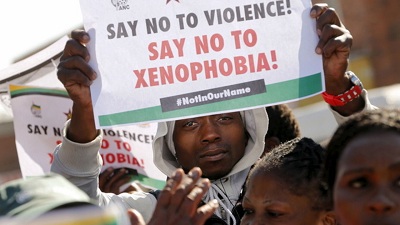
Their success has often been attributed to several economic advantages including, collective purchasing arrangements that lower procurement costs, extended operating hours, lean operating structures, sophisticated informal distribution networks, lower mark-ups on essential products and efficient inventory management. The result is a highly competitive retail model that frequently delivers cheaper goods to low-income consumers and the economic benefits extend beyond the shop owners themselves.
Migrant-owned enterprises generate rental income for South African landlords, employment opportunities for local residents, demand for South African wholesalers, Value Added Tax (VAT) revenues through formal supply chains, local transport and logistics activity and consumer welfare gains through lower prices.
A growing body of research from South African universities has found that competition from migrant-owned enterprises often forces greater efficiency throughout township retail markets, ultimately benefiting consumers.
In many communities, migrant-owned businesses have become an integral component of local economic ecosystems and have become part of the infrastructure through which township economies function.
The Microeconomic Cost of Xenophobic Violence
Economics is often most visible in everyday transactions than in national statistics. When xenophobic violence erupts, the consequences quickly extend beyond the targeted victims. Recent reports from affected communities during the 2026 protests indicate widespread shop closures, with some localities reportedly experiencing closure rates exceeding 90% as business owners fled intimidation, looting and violence.
Violence forces businesses to shut down, which chokes off supply chains. With less competition in the market, prices inevitably climb, leaving households struggling to make ends meet. When hundreds of retailers disappear from local markets, competition weakens. Fewer suppliers mean reduced product availability. Scarcity pushes prices upward and the burden falls disproportionately on poor households.
Consumers face longer travel distances to purchase essentials, higher food prices, reduced product variety, lower access to credit often provided informally by local traders as well as lost convenience and market access. Meanwhile, South African landlords lose tenants. Local employees lose wages. Suppliers lose customers. Municipalities lose economic activity.
The shift from targeting migrants to harming the broader local economy is often driven by the fact that modern economies are deeply interconnected webs. When violence or exclusionary policies disrupt one sector, the consequences ripple outward. In economic terms, the destruction of productive businesses represents a negative supply shock imposed upon already vulnerable communities.
The Macroeconomic Consequences
The economic damage of these eye lowering xenophobic acts does not stop at township boundaries. Financial markets, multinational corporations and international investors closely monitor social stability when assessing investment destinations.
When a society experiences recurring xenophobic violence, it does more than harm the immediate victims. It broadcasts a message that the state is either unwilling or unable to maintain order. This perception of institutional fragility acts as a powerful deterrent to both local and foreign investment, which creates a corrosive feedback loop.

According to the World Bank and IMF, South Africa already faces significant challenges attracting the investment necessary to accelerate growth and employment creation. Persistent social unrest raises perceived risk further.
The consequences can include reduced foreign direct investment, higher borrowing costs, delayed investment decisions, weaker tourism demand, lower entrepreneurial activity and slower business formation.
You can almost watch it happen in real time in a quiet unravelling that begins the moment stability falters. The first sign is always the sharp, immediate drop in VAT. This is because value added tax lives in every transaction, swipe of a card and every sale at a register. When storefronts shutter and local trade stutters, that revenue vanishes. A hole opens in the liquid heart of the tax system.
That hole deepens as the corporate tax void sets in. Businesses that once held the economy begin to close or pull back. Profits shrink, then disappear. And with them goes the corporate income tax, which is the bedrock of national fiscal health. What’s left is a hollowed-out ledger and a government suddenly unable to plan for the quarter ahead, let alone the year.
But the worst of it lands on municipalities. Cities and towns that depend on business rates, licensing fees, property taxes are the ones who feel the weight first and longest. Sanitation crews get cut. Potholes multiply. Policing thins out. And that’s the death spiral. A neighbourhood that becomes harder to live in, harder to run a business from, harder to love. So more people leave, more doors close and the tax base shrinks again.
Then comes the reverse multiplier which is not the upward lift of new spending, but the downward drag of lost income. As workers are displaced, personal income tax evaporating and as economic activity retreats into the informal sector, the rest of the tax base simply becomes invisible. Harder to track and impossible to tax are the best descriptives. And by then, the decline becomes more of a gravity.
For an economy already struggling to achieve sustained growth above 2%, such losses become increasingly costly. Investors rarely distinguish between targeted violence and broader instability. Both raise questions about predictability, governance and the security of economic assets.
In that sense, xenophobic violence risks becoming economically self-defeating. It portrays as an attempt to improve opportunities that ultimately discourages the very investment needed to create them.
Regional Economic Consequences
South Africa is not and has never been an isolated economy. It serves as a commercial hub for much of Southern Africa and maintains deep economic links with neighbouring countries through trade, investment, migration, logistics and finance.
Previous xenophobic episodes have triggered diplomatic tensions with countries including Nigeria, Mozambique and Zimbabwe. The consequences have included travel advisories, border disruptions, protests against South African businesses abroad, threats to South African investments and supply-chain interruptions.
Major South African firms such as MTN Group and Shoprite Holdings operate extensively across the continent and depend heavily on regional goodwill. When economic tensions spill across borders, exports, investments and commercial relationships may suffer. The costs of xenophobia therefore extend beyond domestic markets into regional economic diplomacy and continental trade integration.
Who Is Really Being Protected?
In Aesop’s fable, the farmer believed he was protecting his future when he slaughtered the goose that laid the golden eggs. Convinced that greater wealth lay hidden inside, he reached for a quick solution to a long-term problem. What he discovered was excruciatingly devastating. There was no hidden treasure. The goose was exactly what it appeared to be and in destroying it, he eliminated the very source of his prosperity.
South Africa currently confronts a similar dilemma. The frustration driving anti-immigrant sentiment is real. High unemployment, rising living costs, crime, inequality and economic exclusion have left many citizens searching for answers. Nonetheless, history repeatedly warns that societies often inflict the greatest damage on themselves when they mistake symptoms for causes and scapegoats for solutions.
The greater danger is that, in attempting to protect jobs, businesses and livelihoods, South Africa may be weakening some of the very economic networks that help sustain township commerce, supply chains, entrepreneurship, rental incomes, consumer welfare and regional trade. As empty shopfronts do not create employment so too does fear not attract investment. And neither does violence build prosperity.
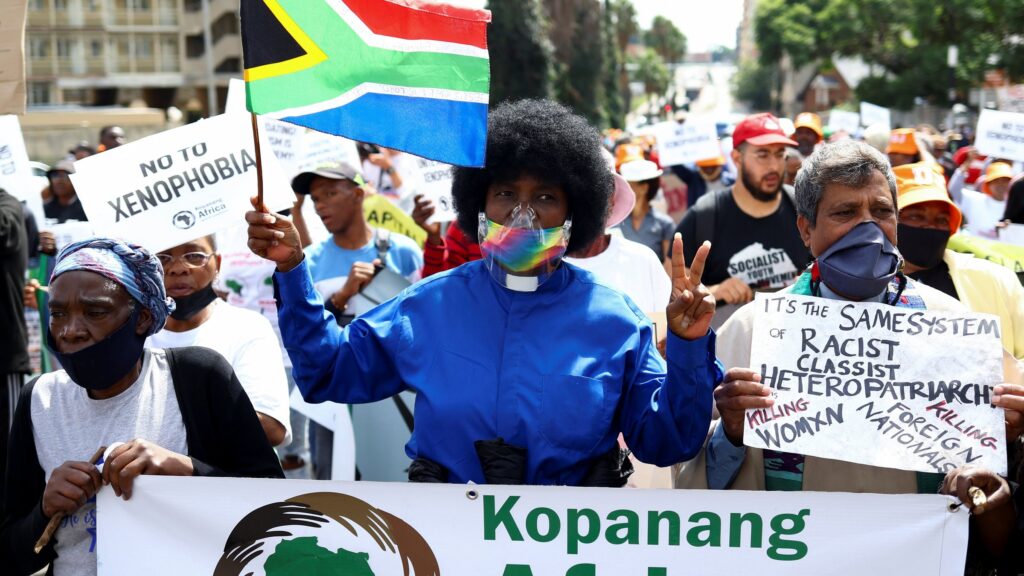
The fact suggests that South Africa’s deepest economic wounds were not created by migrants. They were created by years of slow growth, infrastructure failures, energy shortages, weak investment, skills mismatches and policy shortcomings. Driving out foreign traders cannot repair a power station in Eskom’s network. It cannot also unclog a congested port in Durban. And it certainly cannot attract capital into an economy struggling to grow.
Ultimately, the debate in South Africa shouldn’t be about whether its people deserve protection. That’s a given. The real problem is a fundamental failure of focus. In prioritizing the wrong targets, the country is dismantling the very infrastructure that keeps it afloat. It’s the classic mistake of killing the goose to get the eggs. By the time the reality of that sinks in, the damage will already be done.
Sources
African Development Bank. (2025). African Economic Outlook 2025. African Development Bank Group.
Aesop’s Fables. (Various editions). The Goose That Laid the Golden Eggs. Classical Greek fable.
International Labour Organization. (2024). South Africa Labour Market Review. Geneva: ILO.
International Monetary Fund. (2025). South Africa: 2025 Article IV Consultation Staff Report. Washington, DC: IMF.
Organisation for Economic Co-operation and Development. (2025). OECD Economic Surveys: South Africa 2025. Paris: OECD Publishing.
South African Revenue Service. (2025). Annual Report 2024/25. Pretoria: SARS.
Statistics South Africa. (2026). Quarterly Labour Force Survey (QLFS), Quarter 1 2026. Pretoria: Stats SA.
United Nations Conference on Trade and Development. (2025). World Investment Report 2025. Geneva: UNCTAD.
United Nations High Commissioner for Refugees. (2025). Regional Trends in Forced Displacement and Migration in Southern Africa. Geneva: UNHCR.
World Bank. (2024). Driving Inclusive Growth in South Africa: Challenges and Opportunities. Washington, DC: World Bank.
World Bank. (2025). South Africa Economic Update: Creating Jobs Through Growth and Reform. Washington, DC: World Bank.
DISCLAIMER: The Views, Comments, Opinions, Contributions and Statements made by Readers and Contributors on this platform do not necessarily represent the views or policy of Multimedia Group Limited.
DISCLAIMER: The Views, Comments, Opinions, Contributions and Statements made by Readers and Contributors on this platform do not necessarily represent the views or policy of Multimedia Group Limited.
Source link