
On Friday, much of the world’s attention was fixed on the closing moments of the visit by US President Donald Trump to Beijing. At the same time, most football lovers had their eyes on the blockbuster FA Cup final between Manchester City and Chelsea at Wembley the next day.
But a very different operation was unfolding thousands of miles away in northeastern Nigeria.
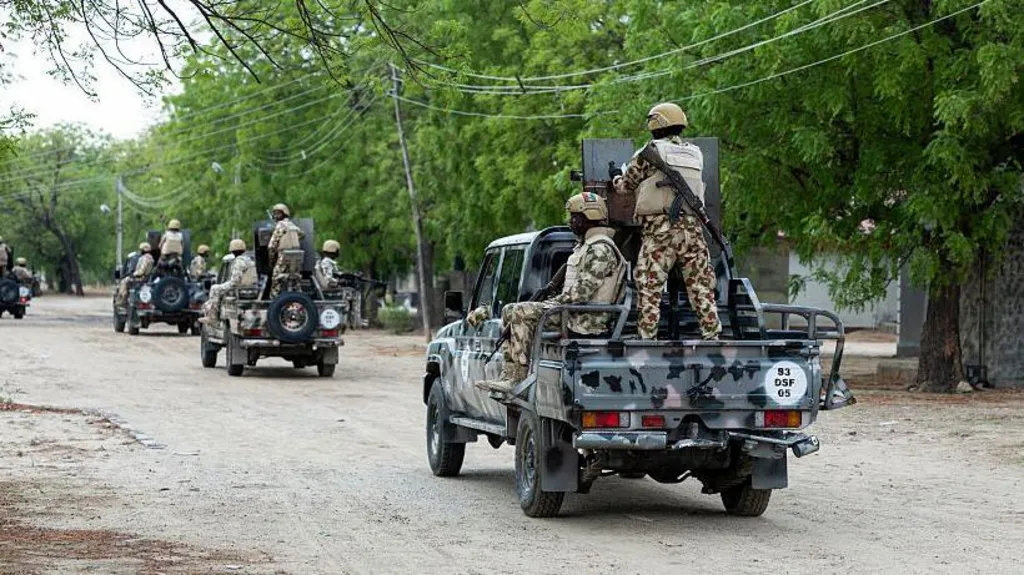
Shortly after midnight on Saturday, a coordinated American-Nigerian military strike was unleashed, targeting a heavily fortified compound deep inside the Lake Chad Basin, a region long synonymous with jihadist violence, kidnappings and insurgency.
By morning, officials reported that Abu-Bilal al-Minuki, described by Washington as the second-in-command of the Islamic State group globally and one of the world’s most active terrorists, was dead.
The operation, carried out jointly by US Africa Command (AFRICOM) and the Nigerian Armed Forces, marks one of the most significant counterterrorism missions in West Africa in recent years and underscores the growing strategic importance of Africa in the global fight against ISIS.
A four-hour operation
According to officials, the mission began at about 12:01 am local time on May 16 and lasted less than four hours.
The target was al-Minuki’s compound in Metele, in Nigeria’s Borno State, a rugged and conflict-ridden area near the borders of Chad, Cameroon and Niger that has served for years as a stronghold for Islamic State West Africa Province (ISWAP).
It was described as a “precision air-land assault” involving months of intelligence gathering, surveillance and infiltration.
American military assets reportedly included MQ-9 Reaper drones, surveillance aircraft and an AC-130 gunship, while Nigerian intelligence operatives provided local human support that helped pinpoint the location of the ISIS leader and map potential escape routes.
Special operations forces were also deployed around the perimeter of the compound to prevent militants from fleeing during the assault, according to a security briefing on the operation.
According to AFRICOM and the Nigerian Defence Headquarters, multiple ISIS combatants and several of al-Minuki’s top lieutenants were killed alongside him.
“The most active terrorist in the world”
President Donald Trump announced the operation later in a post on X, which quickly reverberated across international security circles.
“Tonight, at my direction, brave American forces and the Armed Forces of Nigeria flawlessly executed a meticulously planned and very complex mission to eliminate the most active terrorist in the world from the battlefield. Abu-Bilal al-Minuki, second in command of ISIS…”
Trump said al-Minuki had believed he could “hide in Africa” but that US intelligence sources had been tracking his movements closely.
“He will no longer terrorise the people of Africa or help plan operations to target Americans,” the president added. “With his removal, ISIS’s global operation is greatly diminished.”
The President of the Federal Republic of Nigeria, President Bola Ahmed Tinubu, followed with a post of his own confirming the counterterrorism operation.
“Our determined Nigerian Armed Forces, working closely with the Armed Forces of the United States, conducted a daring joint operation that dealt a heavy blow to the ranks of the Islamic State,” he stated.
“Early assessments confirm the elimination of the wanted IS senior leader, Abu-Bilal Al-Manuki, also known as Abu-Mainok, along with several of his lieutenants, during a strike on his compound in the Lake Chad Basin.”
AFRICOM Commander Gen. Dagvin Anderson described the operation as evidence of deepening military cooperation between Washington and Abuja.
“AFRICOM, in coordination with the Armed Forces of Nigeria, bravely and valiantly conducted a successful mission that resulted in the elimination of Abu-Bilal al-Minuki and multiple other ISIS leaders,” he said.
“This operation underscores the exceptional value of the U.S.-Nigeria partnership and was made possible through the cooperation and coordination of our forces in recent months. Make no mistake, our two nations will relentlessly pursue and neutralise terrorist threats and are committed to protecting our people and interests.”
The Nigerian Defence Headquarters released a clarification addressing public confusion, noting that while al-Minuki was prematurely reported dead during an operation in 2024, his definitive elimination occurred during this latest operation.
But for some security observers, previous conflicting accounts leave a question lingering on their minds: “So, where is the body of Abu-Bilal al-Minuki”?
The man known as Abu-Mainok
Not much is known about al-Minuki in the eyes of the public.
Operating largely in the shadows, he was also known by the alias Abu-Mainok, a reference believed to be linked to Mainok, a town in Borno State that has witnessed repeated jihadist attacks over the past decade.
US officials marked him a ‘Specially Designated Global Terrorist’ in 2023, accusing him of supervising ISIS operations stretching from West Africa to the Sahel and beyond.
Officially claimed he played a central role in ISIS’s General Directorate of Provinces, the body responsible for coordinating the group’s international affiliates outside the Middle East.
According to AFRICOM, al-Minuki helped oversee global financial operations, weapons procurement, drone programmes, explosives manufacturing and propaganda coordination for ISIS-linked groups operating across Africa and parts of the Middle East.
He was also linked to hostage-taking operations and was previously associated with Boko Haram before the group splintered and sections pledged allegiance to ISIS in 2015.
Reports also tied him to the 2018 abduction of more than 100 schoolgirls in Dapchi, Yobe State, one of the most traumatic mass kidnappings in Nigeria’s modern history.
A region scarred by violence
For residents across northeastern Nigeria, the announcement of al-Minuki’s death brought cautious relief but also painful reminders of nearly two decades of conflict.
Since Boko Haram launched its insurgency in 2009, violence linked to jihadist groups has killed tens of thousands of people and displaced millions across Nigeria, Chad, Niger and Cameroon.
Entire communities in Borno State have been repeatedly emptied by attacks, while families continue to live in camps after fleeing villages destroyed by insurgents.
In Maiduguri, the capital of Borno State, some residents welcomed news of the operation but said they had learned not to celebrate too quickly.
Although the death of a senior ISIS figure represents a symbolic and operational blow, extremist organisations often adapt rapidly after losing leaders.
“You’re looking at a chain of events related to armed groups who would spring up or even have a coordinated effort to try and then retaliate. So, I think for me, personally, there isn’t much significance in this, because the killing of one person doesn’t mean the network or the armed group is obliterated,“ Research Fellow and Lecturer in Conflict, Peace, and Security at the Kofi Annan International Peacekeeping Training Centre (KAIPTC) commented on the development in an interview with MyJoyOnline.
“Holistically, there should be a major operation against these armed groups. You identify every corner they are in and then you implement a massive operation. It should be a coordinated operation.
“Sub-regional organisations, ECOWAS, AU, all have to come in now because there have been talks about the African Standby Force, which is now going to be used against the armed groups. What has been the state of the ECOWAS Standby Force? What is the problem? What is the challenge? So, if we should have the ASF active, then you would think that every government would call upon the African Standby Force to come to aid. But as it is now, we don’t.”
The security analyst further proposed a solution to governments within the region.
“But first of all, we should try and then look at things that warrant these groups to come in the first place. Development, economic growth, issues about marginalisation, injustice, corruption, transparency and accountability. All these, if you are not able to do or tackle them, then you create room for these armed groups.”
Africa’s growing importance in the fight against ISIS
The strike also highlights how Africa has become increasingly central to global counterterrorism operations.
As ISIS lost territory in Iraq and Syria over recent years, affiliates in Africa, particularly in the Sahel and Lake Chad Basin, expanded their influence.
US intelligence officials have repeatedly warned that extremist groups operating in West Africa are becoming more sophisticated, with growing access to weapons, financing networks and drone technology.
The operation against al-Minuki appears to reflect a broader shift in Washington’s strategic priorities toward containing jihadist expansion across Africa.
In recent years, American military support for Nigeria has expanded through intelligence-sharing, drone deployments and special operations cooperation.
The killing of al-Minuki follows a series of targeted operations against ISWAP commanders.
In April 2022, Nigerian forces and the Multinational Joint Task Force reportedly killed ISIS envoy Ammar Bin-Umar and several commanders in coordinated airstrikes.
In February this year, Nigerian troops announced the killing of two senior ISWAP commanders, identified as Ya Muhammad and Abou Dawuda, during operations near Damboa in Borno State.
Authorities also announced the death of former ISWAP leader Abu Musab al-Barnawi in 2021.
Yet despite repeated military successes, insecurity persists across much of the region.
Security Consultant Richard Kumadoe offered solutions for African countries battling terrorism and insurgents.
“In recent times, we’ve heard of terror attacks in Burkina Faso, Mali, Nigeria, and the Sahara region. Governments within these regions are fighting so hard to mitigate the impact of some of these attacks.
“The reason being that it has not only devastated livelihoods and communities, but it has a negative effect on the socio-economic culture and national development. What African leaders can do is to collaborate more, put resources together, and ensure that either the attacks do not happen in the first place, or when they do happen, the effect will be minimised,” he said.
“One way of doing it is to ensure that the security infrastructure in all these countries is superb, they are effective, and the frontliners are willing to put themselves on the line for the countries they represent,” he suggested.
“For many civilians living in northeastern Nigeria, the war against insurgency is measured less by military communiqués than by whether children can attend school safely, farmers can return to their fields, and families can sleep without fear.
“We have heard before that commanders were killed,” said Musa Ibrahim, a trader displaced from Marte Local Government Area, in reaction after news spread on Saturday about the development. “But the attacks continue. What we want is peace, not just announcements.”
For many residents who have spent years living under the shadow of insurgency, they still wonder whether the death of one of ISIS’s most senior figures would finally bring the peace they have long awaited.
DISCLAIMER: The Views, Comments, Opinions, Contributions and Statements made by Readers and Contributors on this platform do not necessarily represent the views or policy of Multimedia Group Limited.
DISCLAIMER: The Views, Comments, Opinions, Contributions and Statements made by Readers and Contributors on this platform do not necessarily represent the views or policy of Multimedia Group Limited.
Source link