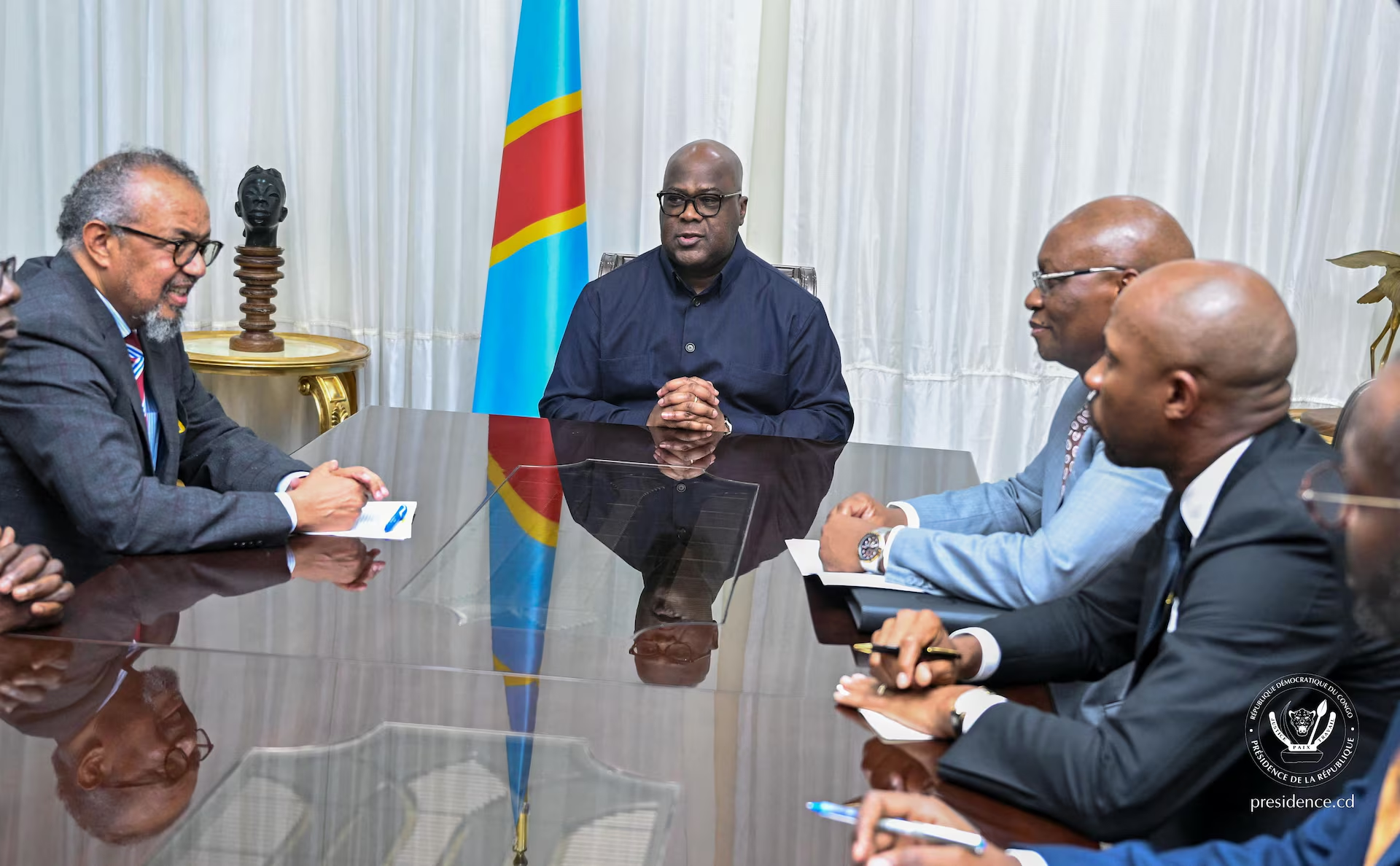
The World Health Organisation (WHO) said on Wednesday that the world is “catching up” with the Ebola outbreak in the Democratic Republic of Congo, where there have been 344 confirmed cases of the disease and 60 confirmed deaths, although challenges remain.
“The outbreak had a big head start, and we’re still behind, but under the leadership of the government of DRC, we’re catching up,” WHO Director-General Tedros Adhanom Ghebreyesus said during a press briefing.
The outbreak, linked to the Bundibugyo strain of the virus, has spread to neighbouring Uganda where 15 cases have been confirmed, including one death, the agency said.
Access to testing has also improved, which is why hundreds of cases that were initially suspected as Ebola have now been ruled out, the WHO said. The most common tests used for Ebola do not detect the Bundibugyo strain causing this outbreak, which had caused a backlog.
“What the field team is doing is looking to clear the backlog. So the lab so far has done 1,445 tests that cleared almost all the backlog we had, and every day as the surveillance improves, there are new suspect cases,” said Abdirahman Mahamud, WHO director of health emergency alert and response operations.
There are 116 suspected cases awaiting testing, he said. He said a team is also working through the 220 suspected deaths to ascertain the likelihood of the deaths being caused by Ebola.
Six people have recovered in the DRC and two in Uganda, showing that Ebola patients can survive if they have access to care and seek treatment as soon as symptoms appear, the agency said.
The outbreak response continues to face challenges in scaling up testing capacity and tracing contacts, while blanket travel restrictions imposed by some countries are disrupting supply chains and hampering efforts, the agency said.
Only about 45% of contacts have been followed up, and to stay ahead of the outbreak, that figure needs to rise above 90%, Tedros said.
Tedros also said the outbreak may have started as early as January and that teams were still investigating it, but stressed that the focus now should be on containing it.
That will cost WHO at least $115 million over the next three months, of which around 35% has been raised, the agency’s emergencies head, Chikwe Ihekweazu , said, adding that “a lot more” funding would be required for the duration of the response.
A wider plan and fundraising will be launched with other partners, including the Africa Centres for Disease Control and Prevention and the governments of Congo and Uganda, on Friday, he said.
DISCLAIMER: The Views, Comments, Opinions, Contributions and Statements made by Readers and Contributors on this platform do not necessarily represent the views or policy of Multimedia Group Limited.
DISCLAIMER: The Views, Comments, Opinions, Contributions and Statements made by Readers and Contributors on this platform do not necessarily represent the views or policy of Multimedia Group Limited.
Source link